

For pajama brands, fabric selection shapes more than hand feel. It affects seasonal positioning, customer comfort, perceived product value, and the long-term performance of the collection. When a brand wants to develop sleepwear with a cooler feel, the goal is not simply to find a fabric that sounds premium. The real task is to identify which material direction supports airflow, moisture management, and lower heat retention in actual wear.
That is why many product teams ask why some fabrics feel cooler than others or what actually defines a cooling fabric for sleepwear. In practice, cooling performance is rarely determined by fiber alone. Fabric weight, construction, surface feel, and moisture behavior all influence whether a pajama style feels balanced and comfortable during overnight use.
This guide is written for brands, sourcing teams, and product developers who need a clearer framework for evaluating fabrics. It explains what makes a fabric cooling, how to assess breathable fabric vs moisture-wicking fabric, and how to compare common material directions for summer sleepwear, hot-sleeper collections, and premium pajama programs.
Table of Contents
Why Cooling Fabric Matters In Pajama Development
In sleepwear, fabric comfort is experienced over hours, not minutes. A fabric that feels cool in hand may not remain comfortable after extended contact with skin, body heat, and moisture. For this reason, cooling performance should be evaluated as a product development issue rather than a surface-level feature claim.
For pajama brands, this matters in several ways. It influences whether a collection is suitable for summer launches, warm-climate markets, or customers looking for the best fabric for hot sleepers. It also affects how clearly a brand can position its products. A sleepwear line described as breathable, lightweight, or cooling should deliver those qualities in real use, not only in presentation.
When cooling performance is understood correctly, fabric sourcing becomes more focused and product direction becomes easier to define.
What Makes A Fabric Feel Cooling In Sleepwear?
If the goal is to understand what makes fabric feel cool, the most useful answer is performance-based. A fabric feels cooling when it helps body heat escape, manages moisture effectively, and avoids building up excess warmth during wear.
For pajama applications, four factors are especially important:
- airflow
- moisture handling
- fabric weight
- heat retention
These factors work together. A fabric with strong airflow may still feel uncomfortable if it holds moisture. A smooth fabric may feel cool at first touch but become warm if the structure traps heat. This is why the question is not simply which fiber is coolest, but which fabric construction performs best for the intended pajama category.
Breathable Fabric Vs Moisture-Wicking Fabric
Many sourcing discussions include the comparison breathable fabric vs moisture-wicking fabric, but the two terms should not be treated as interchangeable.
Breathability refers to how easily air passes through the fabric. In pajama development, this matters because airflow helps release heat during sleep. Moisture-wicking refers to how the fabric moves moisture away from the skin and helps it spread and dry.
A fabric can be breathable without handling moisture especially well. It can also wick moisture but still feel warm if the structure retains heat. For brands evaluating sleepwear materials, the better approach is to look for a balance of ventilation, moisture response, and wear comfort rather than relying on a single functional claim.
Ask for Quote Now
Subscribe to Product Updates
Silk care tips and new arrivals — straight to your inbox.
What Causes Heat Retention In Fabric?
A useful sourcing question is what causes heat retention in fabric. Heat retention refers to how much warmth a fabric holds close to the body instead of allowing it to dissipate.
In pajama fabrics, heat retention is influenced by several variables:
- heavier fabric weight
- dense knit or weave construction
- bulkier yarn structure
- finishes that reduce airflow
- garment designs that keep more fabric close to the body
This is why brands often ask does fabric weight affect cooling and does weave affect breathability. In practical sourcing, the answer to both is yes. Two fabrics with similar fiber content can deliver very different sleepwear performance because structure and weight often have as much impact as fiber category.
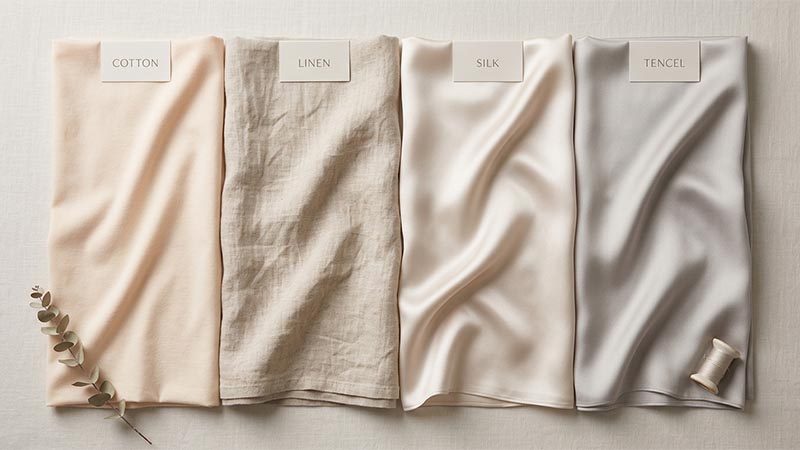
Comparison: Common Fabric Directions For Cooling Pajamas
For product developers, the most productive comparison is not “best fiber” in absolute terms, but which fabric direction best fits the collection goal, target customer, and price point.
Cotton
Cotton remains one of the most practical choices for pajama development because it is familiar, versatile, and easy to position across multiple market levels. In lighter constructions, it can work well for warm-weather sleepwear. However, cooling performance depends heavily on fabric weight, knit structure, and finishing.
Linen
Silk
Tencel And Similar Regenerated Fibers
These fabrics are often selected for softness, drape, and moisture behavior. They are common in discussions such as linen vs Tencel for cooling sleepwear, especially when brands want a fluid, modern hand feel rather than a crisp one. They can be especially useful for collections that need a softer comfort story while still supporting a cooling message.
There is no single answer to which fabric traps the least heat, because real performance depends on fabric development details, not fiber labels alone.

A Decision Checklist For Pajama Brands
When reviewing fabric options for a cooling sleepwear program, use the checklist below to guide sourcing decisions:
- Is the fabric weight suitable for overnight wear in the target season?
- Does the structure allow airflow consistent with a cooling or breathable claim?
- How does the fabric behave after prolonged skin contact?
- Does it manage moisture without becoming sticky or heavy?
- Is the hand feel aligned with the collection direction: soft, crisp, fluid, or luxury?
- Does the material support the intended retail positioning and margin target?
- Is it appropriate for the target market climate and customer profile?
- Will the fabric perform well in the planned pajama silhouette and construction?
- Are care, durability, and finishing compatible with the brand’s quality expectations?
This type of review gives brands a clearer path than choosing by fiber name alone.
How To Evaluate Cooling Fabric For Sleepwear Development
For brands building a new pajama line, the following process helps narrow fabric options more effectively.
Step 1: Define The Product Use Case
Identify whether the collection is intended for summer sleepwear, hot-sleeper needs, premium gifting, resort use, or year-round indoor comfort. The best fabric direction depends on the use context.
Step 2: Define The Comfort Goal
Clarify whether the line should feel airy, dry, silky, lightweight, smooth, or luxuriously soft. “Cooling” can mean different things in different product strategies.
Step 3: Compare Construction, Not Only Fiber
Do not evaluate materials only by content labels. Review knit or weave structure, thickness, drape, recovery, and finishing.
Step 4: Assess Heat And Moisture Together
Brands often ask about the best fabric for night sweats, but this should be evaluated through both moisture handling and heat retention, not one factor alone.
Step 5: Match Fabric Direction To Commercial Strategy
The technically coolest material is not always the best business choice. It must fit the collection price point, sourcing model, customer expectation, and overall brand message.
Common Sourcing Mistakes To Avoid
One common mistake is assuming that fiber alone defines cooling performance. In sleepwear, construction frequently changes the result more than expected.
Another mistake is using broad marketing terms without clarifying the functional goal. A collection described as cooling may actually need better airflow, lower cling, lighter weight, or improved moisture response. These are related, but not identical, requirements.
Brands also sometimes overvalue first-touch sensation. A fabric may feel cool in a showroom but perform differently in actual overnight wear. That is why questions such as does polyester trap heat or does cotton keep you cool at night should always be considered in the context of a specific fabric construction and intended end use.
FAQ
What Makes A Fabric Cooling In Pajama Use?
A cooling fabric helps release body heat, manages moisture effectively, and avoids trapping excess warmth during extended wear.
Is Breathable Fabric The Same As Cooling Fabric?
No. Breathability supports airflow, but cooling performance also depends on moisture behavior, fabric weight, and heat retention.
What Should Pajama Brands Prioritize First?
Start with the product goal: target customer, market climate, comfort direction, and intended price point. Fabric choice should follow product strategy.
Which Fabric Is Best For Summer Pajamas?
There is no universal best option. Cotton, linen, silk, and Tencel can all work well depending on the construction, finish, brand positioning, and customer expectation.
How Can Brands Evaluate Cooling Fabric More Accurately?
The best method is to assess airflow, moisture handling, fabric weight, and long-wear comfort together rather than relying on fiber labels or supplier claims alone.
Contact Us
For pajama brands, selecting a cooling fabric should be a product decision, not just a material preference. The strongest fabric direction is usually the one that supports the intended customer, climate, silhouette, comfort story, and commercial positioning at the same time.
If your team is developing a summer collection, a hot-sleeper line, or a premium cooling pajama program, a clear sourcing framework leads to better decisions. At Silkua, we work with pajama brands to compare material directions, evaluate comfort performance, and develop fabrics that align with both product goals and market expectations. Contact Us to discuss the right fabric direction for your next collection.
Request An Instant Quote For Your Brand!
You May Also Find These Topics Interesting
From Sample to Delivery: Your Silk Manufacturing Product Guide
Pillowcase Material Selection:
How to Work with a Chinese Silk Factory for Seamless Customization
How to Work with a Chinese Sil

How To Launch a Custom Sleepwear Line Using Tencel, Cotton, or Imitation Silk
How To Launch a Custom Sleepwe