
100% Mulberry Silk vs Satin Scrunchies: Breakage, Frizz, and Elastic Longevity
You want a hair tie that looks premium, protects strands, and actually lasts. In this guide, YOU get a clear comparison between 100% mulberry silk and satin scrunchies for hair breakage, frizz control, and elastic durability. You’ll learn how fabric, tube width, elastic specs, and stitching affect comfort and performance, how to care for each material, and what to include in a tech pack. If you’re sourcing private label or wholesale, you’ll also see QC checkpoints, lead times, and low MOQ options to reduce returns and boost repeat sales.
What Is 100% Mulberry Silk vs Satin?
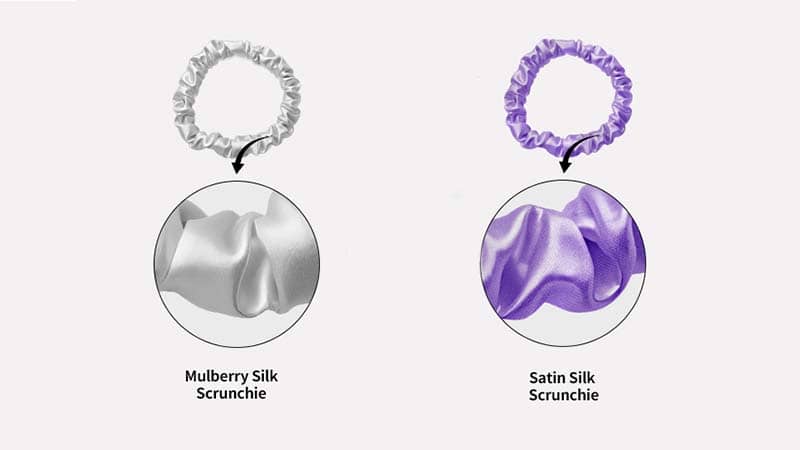
Mulberry silk is a natural protein filament with a smooth handfeel and low-friction surface. Satin is a weave, usually made from polyester or nylon, designed for shine and glide. This difference matters: the silk fiber itself is intrinsically smoother, while polyester satin relies on weave alone.
- Typical silk specs: 19–22 momme for accessories, grade 5A–6A.
- Typical satin specs: 80–120 GSM polyester satin for value lines.
- Practical takeaway: If you’re weighing a 100% mulberry silk scrunchie vs satin scrunchie, silk will feel softer on hair and breathe better.
Ask for Quote Now
How Do These Fabrics Impact Hair Breakage?
Hair breakage comes from friction, tension, and snagging at seams. Silk’s low coefficient of friction reduces mechanical stress during wear and removal, which is critical for fine, curly, or bleached hair.
- Silk edge: Fewer snag points and less static, translating to fewer broken strands.
- Satin reality: Quality satin can be gentle, but synthetics may increase static under dry conditions.
- Construction note: Turned tubes, invisible ladder stitch, and smooth seam joins matter as much as fabric.
If your priority is “silk vs satin scrunchie for hair breakage,” silk is the safer choice for fragile hair.
Which Option Controls Frizz Better?
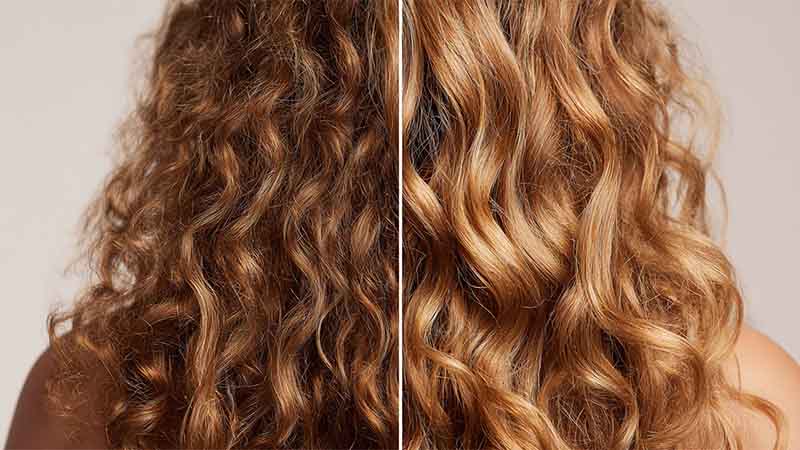
Frizz rises when hair loses moisture or builds static. Mulberry silk helps maintain a balanced moisture environment and reduces static buildup; polyester satin is less breathable and can elevate halo frizz in low humidity.
- Frizz control: A premium silk scrunchie is a strong pick for anti-frizz routines.
- Use case: High-porosity and curly hair types report smoother next-day hair with silk.
- Care tip: Air-dry; avoid high heat that increases static and weakens elastic.
If you’re asking “are satin scrunchies good for frizz control,” they can be acceptable, but silk consistently performs better for long-term frizz management.
What Determines Elastic Longevity?
Elastic life is driven by core material, cover, and stitch technique—not the outer fabric alone.
- Core options: Natural rubber (strong tension, heat-sensitive) vs elastane/spandex (better fatigue resistance).
- Targets: Aim for 85–90% recovery after 500–1,000 cycles in a tension retention test.
- Stitching: Avoid needle cuts into elastic; use bartack guards or join outside the elastic path.
In short, “silk scrunchie elastic durability comparison” comes down to specifying the right elastic and protecting it during sewing.
How Do Momme, GSM, and Tube Width Affect Performance?
Fabric weight and dimensions shape user experience.
- Silk: 19 momme offers light drape; 22 momme reads more premium and resists abrasion.
- Satin: Heavier GSM reduces see-through and improves handfeel but traps more heat.
- Tube width: Skinny (2.5–3.0 cm) for minimal bulk; classic (3.5–4.5 cm) for balance; oversized (5.0–7.0 cm) to spread pressure.
If you compare 19 momme vs 22 momme silk scrunchie options, the heavier silk generally feels fuller and is gentler under tension.
Which Sizes Work Best for Different Hair Types?
Match diameter and tube width to hair density and texture.
- Fine hair: Skinny, low-tension elastic for no-crease styling.
- Thick hair: Classic or oversized to reduce pressure points and snag risk.
- Curly/coily hair: Oversized silk scrunchie for protective styles and bedtime ponytails.
If you need a “silk scrunchie for curly and coily hair,” choose 22 momme silk with a wider tube and soft elastic.
Ask for Quote Now
Does Labeling and Construction Affect Breakage?
Yes. Small details can undo fabric benefits.
- Seams: Turned-and-topstitched tubes reduce raw-edge friction.
- Join: Hidden ladder stitch minimizes hard lumps.
- Labels: Soft woven tabs positioned away from scalp contact; or move logos to the pouch.
These choices directly lower snagging and returns linked to comfort issues.
Are There Measurable Differences in Friction and Static?
You can validate performance during development.
- Friction: Hair-on-fabric tests show lower values for mulberry silk than polyester satin.
- Static: Silk accumulates less charge in low humidity.
- Wear simulation: 500-cycle stretch tests help confirm elastic recovery.
Publishing highlights—like “friction coefficient of silk vs polyester satin on hair”—builds trust on PDPs.
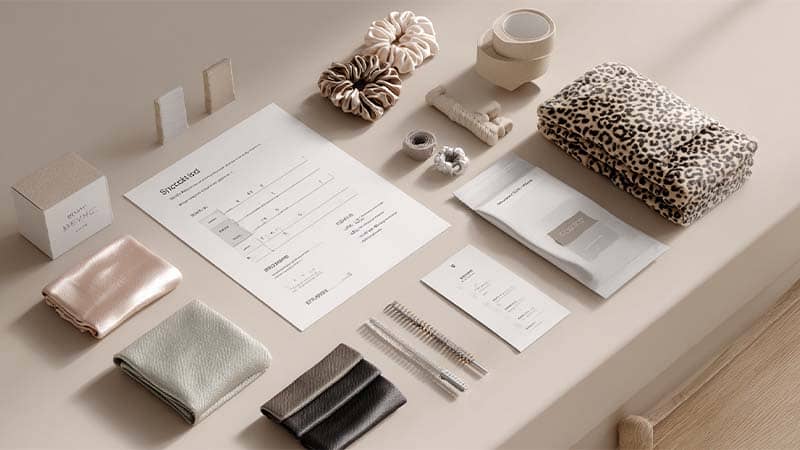
What Specs Should You Put In a Tech Pack?
Clear specs shorten sampling time and prevent miscommunication.
- Fabric: “22 momme, 100% mulberry silk, grade 6A, Pantone XXXX C.”
- Satin alt: “100% polyester satin, 110 GSM, Pantone XXXX C.”
- Elastic: “Flat elastic 5–6 mm, 85–90% recovery after 1,000 cycles.”
- Dimensions: Tube width, finished outer diameter, elastic length before join.
- Stitching: Invisible ladder close, minimum 10–12 SPI.
- Testing: AQL plan (e.g., II, 2.5); colorfastness standards; tension retention benchmarks.
- Packaging: Recyclable gift box or drawstring pouch with barcode.
These points align with sourcing checklists like “AQL sampling plan for hair accessories” and “Pantone color matching for silk scrunchies.” If you plan to launch custom scrunchies alongside other hair ties, keep the same spec template to streamline sampling and QC.
Price, Margin, and Perceived Value
Silk has higher COGS but commands premium pricing and stronger reviews. Satin wins for entry price points, multipacks, and promotions.
- Silk play: Better LTV, giftable sets, lower breakage complaints.
- Satin play: Competitive bundles for marketplaces; solid option for promotional kits.
- Hybrid: Lead with silk hero SKUs; add satin value tiers.
Assess contribution margin after returns, not only landed cost.
Care & Longevity: How Should YOU Maintain Them?
Care impacts both fabric face and elastic life.
- Washing: Hand wash or machine delicates in a mesh bag; cold water; pH‑neutral detergent for mulberry silk.
- Drying: Lay flat; avoid tumble heat to protect elastic.
- Storage: Keep away from oils and solvents that degrade rubber cores.
- FAQ framing: “How to wash silk scrunchies?” and “How long do silk scrunchies last?”—with proper care, months to years, depending on use.
Providing a short “silk scrunchie care card” reduces support tickets and extends lifespan.
Planning a Small Launch or Refresh
Clear timelines and simple choices keep things moving.
- Sample timing: About 7–20 days depending on color count and fabric choice.
- Branding: Woven labels or micro‑embroidery for logos.
- Packaging: Recyclable backer cards, tins, or pouches that match your color palette.
- Shipping choices: Express for launches; economy for replenishment.
These notes help plan cash flow and delivery dates without surprises.
Quality Checks That Matter
Bake quality into the process, not just the final pass.
- Inline checks: Seam integrity, thread ends, label position at regular intervals.
- Final inspection: Size tolerance, color shade bands, visual defects.
- Functional: Sample a portion for elastic snap‑back; confirm recovery percentage benchmarks.
- Records: Keep a shade standard and a gold seal sample for each colorway.
A clear quality checklist for silk scrunchie production becomes a trust signal for shoppers.
Ask for Quote Now
When to Choose Satin Instead of Silk
Choose satin for price-sensitive capsules, festival drops, or gifting bundles where margin and color variety matter more than maximum hair protection. Mitigate risks with heavier GSM, smooth labels, and reliable elastic.
If you’re creating satin scrunchie value packs for promotions, balance costs with a dependable elastic spec to keep reviews positive.
Final Verdict: Which Should You Choose?
- Breakage: Silk wins for fragile, fine, curly, or bleached hair.
- Frizz: Silk delivers more consistent anti-frizz results.
- Elastic life: Determined by elastic material, stitch density, and protection from heat—regardless of outer fabric.
If you value hair health and a premium feel, pick 22 momme, grade 6A silk with a classic or oversized tube and soft, durable elastic. For entry tiers and bundles, satin works if you specify quality elastic and clean construction.
Ready To Customize? Get Your Quote Today
YOU want fewer returns, happier customers, and better margins. Silkua delivers OEM/ODM scrunchies with custom sizes, colors, woven labels, embroidery, and recyclable packaging. Start with a single sample—low MOQ—and scale fast using 20+ production lines and a rigorous AQL plan.
Send your design file or reference photo.
Receive DFM suggestions and a precise quote within 24 hours.
Approve pre‑production samples and lock delivery dates.
Act now to secure this month’s production slot. Click “Get a Quote,” use Contact Us, or fill out the inquiry form to receive pricing, lead times, and packaging options tailored to YOUR brand today.