
A soft, matte silk that still drapes like liquid—that’s the promise of sandwashed silk. In this guide, YOU’LL learn exactly what sandwashing is, how it changes fiber and fabric performance, and where it shines in real apparel. YOU’LL also see how it compares to untreated charmeuse or twill, what care it needs, and how to source it with confidence. If YOU’RE building a line with Silk Clothing Manufacturers, YOU’LL get actionable specs, QA checks, costing tips, and sourcing prompts to brief your factory correctly.
Table of Contents
Quick Definition: What Sandwashed Silk Is
Sandwashed silk is genuine silk (often charmeuse or twill) that’s mechanically abraded with fine media to create a soft, suede‑like, matte surface. The process diffuses shine, boosts softness, and slightly raises the nap without turning the fabric fuzzy. The result feels broken‑in out of the box while keeping silk’s fluid drape.
How Sandwashing Is Done
Mills tumble finished silk with ultra‑fine sand or ceramic beads, or pass it through brushed rollers. Low pressure, controlled time, and moisture reduce fiber damage. Some mills combine mild enzyme or silicone softeners for handfeel. The best setups preserve filament integrity while evening out surface glare.
Pros: Why YOU Might Choose Sandwashed Silk
- Soft, peach‑skin hand with reduced glare, ideal for minimalist aesthetics.
- More forgiving to wrinkles than glossy charmeuse; crush marks relax faster.
- Better color depth in muted palettes; matte finish hides minor scuffs.
- Feels comfortable in warm weather thanks to slightly drier touch.
- Readily accepts garment‑dyed looks for nuanced tones.
Ask for Quote Now
Subscribe to Product Updates
Silk care tips and new arrivals — straight to your inbox.
Cons: What To Watch Out For
- Slight reduction in tear and tensile strength if over‑processed.
- Marginally higher snag risk than tightly finished twill.
- Matte surface can show abrasion on high‑friction points over time.
- Dye may look a shade duller than on high‑gloss finishes.
- Inconsistent quality if mills use aggressive media or long cycles.
Sandwashed Vs Regular Charmeuse Or Twill
Regular charmeuse is glossy, ultra‑slick, and shows every highlight; sandwashed charmeuse looks calmer and less reflective while keeping the same fluid drape. Twill offers structure and diagonal ribs; sandwashed twill softens those ribs, giving YOU a powdery surface with slightly better grip and a quieter sheen.
Feel, Drape, And Breathability
Sandwashing lifts micro‑fibers on the face, adding a dry, velvety touch. YOU still get silk’s high drape coefficient, so garments flow and skim rather than cling. Breathability remains excellent; the drier hand often feels cooler in humid climates compared to slippery finishes.
Weight And Weave Recommendations

For blouses and dresses, 16–19 momme sandwashed charmeuse delivers float with coverage. For pants and skirts, 19–22 momme sandwashed twill adds body and durability. For tailored tops, 18–20 momme crepe de chine with light sandwash balances opacity and movement—useful when briefing a custom silk shirts program.
Best Uses In Apparel
- Bias‑cut slips and camis with a sophisticated matte glow.
- Relaxed blouses where YOU want movement without high shine.
- Wide‑leg trousers and midi skirts that drape cleanly.
- Minimalist shirts and soft suiting that photographs well.
- Outer layers like overshirts where a peach‑skin hand adds polish.
Download Catalogue!
Download our catalog to view all of our products and select the silk product you want for your project.
Subscribe to Product Updates
Silk care tips and new arrivals — straight to your inbox.
Not‑So‑Great Uses
- High‑stress abrasion zones (e.g., backpack straps) unless reinforced.
- Ultra‑formal eveningwear where mirror gloss is the point.
- Very lightweight scarves that rely on shimmer for visual interest.
Impact On Color And Printing
Matte surfaces scatter light, so colors look deep, powdery, and even. Dark tones read more sophisticated; pastels look modern rather than sweet. Print edges remain clean, but extremely fine metallic or high‑gloss effects are subdued. For logos and placement prints, pre‑test saturation and outline sharpness.
Durability And Seam Performance
Well‑controlled sandwashing keeps filament strength close to untreated fabric. For seams, specify balanced stitch density (8–10 SPI for lightweights, 10–12 for midweights) and fine needles to avoid runs. Interfacings should be lightweight and soft‑fusible to preserve drape and avoid strike‑through.
Care And Maintenance
- Wash cold on delicate with pH‑neutral silk detergent or hand wash.
- Use a mesh bag; low spin; no bleach, optical brighteners, or enzymes.
- Air dry flat or on a padded hanger; steam on low from the reverse.
- Store away from rough zippers or Velcro to protect the raised nap.
With sensible care, the matte finish stays smooth and even.
How To Verify Quality When Buying
- Handfeel: Look for a uniform peach‑skin touch without patchy roughness.
- Visual: Matte, even surface with no shiny streaks or sanding lines.
- Specs: Ask for momme, weave, and finishing notes (media type, duration).
- Tests: Colorfastness, dimensional stability, and tensile strength post‑finish.
- Sample: Scrunch test in hand—good fabric releases wrinkles quickly.
Ask for Quote Now
Subscribe to Product Updates
Silk care tips and new arrivals — straight to your inbox.
Sourcing Tips For Brands
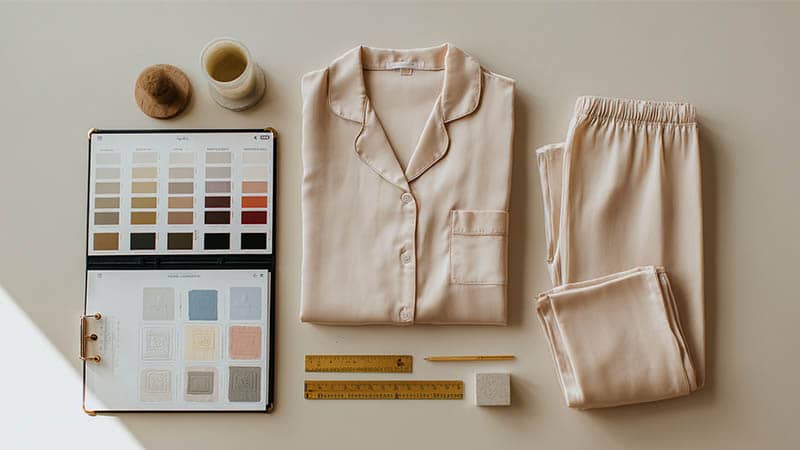
When you brief a silk pajama manufacturer, specify base weave (charmeuse vs twill), momme range, sandwash intensity, and finishing chemistry. For wholesale silk pajamas, align colors to a single base cloth to stabilize shade and MOQ. If you plan a custom silk dress capsule, request pre‑ and post‑finish swatches to confirm weight loss and drape. The same playbook applies if you expand into wholesale silk dresses for retail partners.
Category Extensions That Fit
Sandwashed silk adapts well to relaxed loungewear and evening‑casual capsules. Consider custom silk robes for gifting, with internal ties to protect the matte face. For resort or bridal packs, test wholesale silk robes in coordinated neutrals. Intimates benefit from the drier hand too—silk lingerie in sandwashed charmeuse feels soft, secure, and less slippery against the skin.
Costing And MOQ Considerations
Sandwashing adds finishing time, yield loss, and QA steps. Expect a premium over standard finishes and MOQs per color. Optimize by consolidating colors in a shared greige and negotiating continuous sandwash runs to reduce setup costs. Build cost sheets that separate base cloth, finishing, color, and make, so YOU can compare quotes across Silk Clothing Manufacturers transparently.
Pattern And Construction Notes
- Favor bias‑friendly patterns; the matte finish flatters curves without glare.
- Use French seams or narrow overlock for lightweight pieces.
- Hem with baby hem or narrow rolled hem; avoid bulky turn‑ups.
- Choose fine, smooth threads and micro‑tex needles to prevent puckering.
- Add bar tacks at pocket openings to protect the softened face.
Comparing To Wash Alternatives
Enzyme‑washed silk uses bio‑polishing for smoothness with less abrasion, often glossier than sandwashed. Stone‑washed is rougher and riskier for filaments. Silicone softening adds glide but can wash out. Sandwashing offers the most reliable, lasting matte hand when controlled.
Sizing And Fit Guidance For Consumers
If YOU prefer relaxed silhouettes, sandwashed silk is forgiving. Choose your true size for blouses and bias slips; size up for straight‑leg pants to keep drape clean. The matte face hides minor creases, making it travel‑friendly with quick steam refreshes.
Sustainability And Compliance
Look for OEKO‑TEX Standard 100 and responsible wastewater management post‑finish. Mechanical sandwashing can be lower‑chemical than heavy softener routes. Ask mills about media recycling, water reuse, and energy sources for tumbling and drying.
Quick Buyer’s Checklist
- Fabric: Sandwashed charmeuse/twill, 16–22 momme, 5A–6A grade.
- Finish: Media type, duration, moisture control, and post‑softeners.
- Tests: Colorfastness, shrinkage, tensile, seam slippage.
- Construction: Needle, thread, stitch density, interfacing choice.
- Care: Clear label with detergent type and ironing guidance.
FAQs: Fast Answers For YOU
- Does sandwashing weaken silk? Slightly if overdone; controlled processes keep strength high.
- Is it itchy? No—proper sandwashing makes it smoother and drier to the touch.
- Will it pill? Rare if you avoid rough abrasion and wash gently.
- Can I dye it? Yes—expect softer, velvety color; approve lab dips.
- Is it suitable for menswear? Absolutely—matte finish suits shirts and unstructured jackets.
Final Takeaway
Sandwashed silk gives YOU a modern, matte elegance with authentic silk drape. Choose the right weave and weight, confirm finishing details, and build patterns that honor its fluidity. With the right partner—whether you need wholesale silk pajamas, wholesale silk robes, or a focused run of custom silk robes—you can scale quality and margin confidently.
Get A Custom Quote And Fabric Sourcing Plan Now
Ready to develop sandwashed silk apparel? Share your target styles (shirts, dresses, robes), weave and momme, colors, and quantities. Fill out the inquiry form or contact us—YOU’LL receive swatch options, lab test outlines, and a landed‑cost quote within 48 hours. Act now to secure earlier sampling slots, better MOQs, and locked‑in pricing with vetted Silk Clothing Manufacturers.
Request An Instant Quote For Your Brand!
You May Also Find These Topics Interesting
Custom Sleep Mask: The Ultimate Guide to Personalized Comfort and Better Sleep
Custom Sleep Mask: The Ultimat
10 Essential Questions to Ask Your Silk Lingerie Manufacturer in China
10 Essential Questions to Ask
Mulberry Silk vs. Imitation Silk: Which Makes You More Profit Long-Term?
Mulberry Silk vs. Imitation Si