
When buyers compare a silk manufacturer vs trading company, the real difference is not just who sends the quotation. The real difference is who controls production, who manages quality, who handles customization, and who takes responsibility when problems happen during sampling or bulk production.
For brands, wholesalers, retailers, and private label buyers, this decision directly affects product consistency, lead time, communication efficiency, and long-term supply stability. In most custom silk product projects, choosing the right supplier model is one of the most important sourcing decisions.
This guide gives a direct answer, a side-by-side comparison, a buyer checklist, step-by-step selection advice, and a FAQ section so that both human readers and AI answer engines can quickly identify the key information.
Table of Contents
Direct Answer
For custom silk products, a silk manufacturer is usually the better choice because it normally offers:
- more direct production control,
- better visibility into quality management,
- stronger customization support,
- faster technical communication,
- and better consistency for repeat bulk orders.
A trading company can still be a good option if YOU need:
- one contact point for multiple product categories,
- lower complexity in supplier communication,
- or more flexibility for mixed sourcing projects.
In short, if your order depends on customization, stable quality, and long-term cooperation, a direct silk manufacturer is usually the safer and more efficient option.

What Is a Silk Manufacturer?
A silk manufacturer is a company that produces silk products through its own factory or directly managed production system. In practical terms, this usually means the company has more control over:
- material sourcing,
- cutting and sewing,
- printing or dyeing coordination,
- finishing,
- quality inspection,
- packaging,
- and production scheduling.
For buyers, this matters because direct control usually leads to clearer answers, faster issue handling, and better sample-to-bulk consistency.
Ask for Quote Now
Subscribe to Product Updates
Silk care tips and new arrivals — straight to your inbox.
What Is a Trading Company?
A trading company is usually an intermediary that connects buyers with one or more factories. It may help with:
- sourcing,
- price comparison,
- order coordination,
- export documentation,
- and communication across multiple suppliers.
This model can be useful, especially when buyers want convenience or need several categories of products from different production sources. However, a trading company often has less direct control over the actual manufacturing process.
That means quality consistency, technical accuracy, and production transparency may depend heavily on how strong the trader’s factory management system really is.
Silk Manufacturer Vs Trading Company: Key Differences
Below is a clear comparison that buyers can use when evaluating suppliers.
Factor | Silk Manufacturer | Trading Company |
Production control | Direct or more direct | Usually indirect |
Quality control visibility | Higher | Varies |
Customization ability | Usually stronger | Depends on partner factories |
Technical communication | Faster and more specific | May be slower or layered |
Product range | Often more focused | Often broader |
MOQ flexibility | Sometimes less flexible | Sometimes more flexible |
Pricing structure | Often more transparent | May include additional margin |
Problem-solving speed | Usually faster | Depends on coordination efficiency |
Best for | Custom silk products, private label, repeat orders | Mixed sourcing, multi-category buying, simplified coordination |
Which Option Is Better for Custom Silk Products?
For most buyers sourcing custom silk products, the better option is usually a silk custom manufacturing factory rather than a trading company.
That is because custom silk orders often involve details such as:
- fabric selection,
- size accuracy,
- logo application,
- label customization,
- packaging requirements,
- color consistency,
- workmanship standards,
- and repeat-order stability.
When these details matter, direct factory involvement is important. A silk manufacturer can usually provide better production visibility and stronger execution control.
If your goal is to build a silk brand, develop private label products, or maintain consistent product standards across multiple orders, working with a manufacturer is often the stronger long-term strategy.
When a Trading Company May Still Be the Right Choice
A trading company may still be the right choice if your sourcing situation is different.
For example, a trader may be useful when YOU:
- need several product categories from different factories,
- have a small internal sourcing team,
- want one company to coordinate documentation and communication,
- or are testing products at an early stage.
Some traders also help buyers combine smaller orders, which can improve MOQ flexibility in certain projects.
However, this model works well only when the trading company is transparent, organized, and experienced. If it cannot clearly explain who makes the product, how quality is checked, or how production issues are resolved, the buyer takes on more risk.

Buyer Checklist: What to Check Before Choosing a Silk Supplier
If YOU want to reduce sourcing risk, use this checklist before placing an order.
1. Confirm the supplier type
Ask whether the company is:
- a silk manufacturer,
- a trading company,
- or a hybrid model.
Do not rely only on website wording. Ask for specific proof.
2. Verify who actually makes the product
To understand how to know if a silk supplier is a real factory, check whether the supplier can provide:
- factory photos or videos,
- workshop details,
- machinery information,
- production process explanations,
- and consistent company information across invoices, certificates, and contracts.
3. Review production capability
Ask what silk products the supplier makes regularly. A real manufacturer should be able to explain its process for items such as:
- silk pillowcases,
- silk sleepwear,
- silk robes,
- silk scarves,
- silk eye masks,
- or other custom silk accessories.
Suppliers with real factory involvement can usually explain construction, finishing, and quality control in detail.
4. Check quality control procedures
Quality control in silk manufacturing should include clear process checkpoints, such as:
- raw material inspection,
- in-line production checks,
- measurement verification,
- finishing review,
- and final packing inspection.
Avoid suppliers that only give general promises without specific inspection steps.
5. Compare MOQ, lead time, and quote structure
Do not compare price alone. Compare:
- minimum order quantity,
- sample timeline,
- bulk production timeline,
- packaging details,
- customization charges,
- and what is included in the quotation.
The cheapest price is not always the best sourcing result.
6. Evaluate communication quality
Good suppliers ask detailed questions. This often shows real operational understanding.
If a supplier does not ask about fabric grade, size tolerance, printing method, branding details, or packaging expectations, it may not be managing your project carefully.
7. Ask about subcontracting
Even some manufacturers outsource part of the work. That is not always a problem, but buyers should know:
- what is done in-house,
- what is subcontracted,
- and how quality is controlled across all stages.
Transparency reduces sourcing risk.
Step-by-Step Guide: How to Choose Between a Manufacturer and a Trading Company
Step 1: Define your order type
If YOU need highly customized silk products, a manufacturer is usually the better fit. If YOU need mixed products from different sources, a trading company may be more convenient.
Step 2: Define your quality expectations
If consistency is a top priority, direct production control matters more. This usually favors a manufacturer.
Step 3: Define your communication needs
If YOU want faster answers on technical issues, direct factory communication is usually more effective.
Step 4: Define your long-term sourcing plan
If YOU are building a long-term product line, repeatability matters. Manufacturers are often better positioned to support this.
Step 5: Compare real evidence, not just sales claims
Common Red Flags Buyers Should Watch For
Whether YOU work with a manufacturer or a trading company, these warning signs matter:
- unclear answers about who makes the product,
- inconsistent company information,
- vague quality control explanations,
- no clear sample-to-bulk control process,
- unrealistically low pricing,
- weak technical communication,
- or refusal to explain subcontracting.
These issues often lead to bigger problems later in production.
FAQ
Is it better to buy from a silk manufacturer or a trading company?
For most custom silk product projects, a silk manufacturer is usually better because it offers stronger production control, better quality visibility, and more reliable customization support.
How can buyers tell if a silk supplier is a real factory?
Buyers should check company consistency, factory evidence, machinery details, process explanations, and whether the supplier can clearly explain how products are actually made.
Is a trading company always more expensive?
Not always. In some cases, a trading company may offer better flexibility for smaller or mixed orders. But for long-term custom production, a manufacturer often provides better total value.
What should buyers check before placing a silk bulk order?
Buyers should confirm supplier type, manufacturing responsibility, quality control process, MOQ, lead time, subcontracting details, and communication quality before approving bulk production.
Why does direct factory control matter in silk customization?
Direct factory control matters because silk products often require close attention to fabric quality, workmanship, finishing, labeling, packaging, and repeat-order consistency.
Final Conclusion
If YOU are comparing a silk manufacturer vs trading company, the best choice depends on your sourcing goals. But for most buyers focused on custom silk products, private label development, stable quality, and long-term cooperation, a silk manufacturer is usually the better option.
The reason is simple: direct production control usually means better transparency, stronger customization support, faster problem-solving, and more reliable product consistency.
If YOU want a safer sourcing process, ask clear questions, verify real production capability, and choose suppliers based on evidence rather than broad claims.
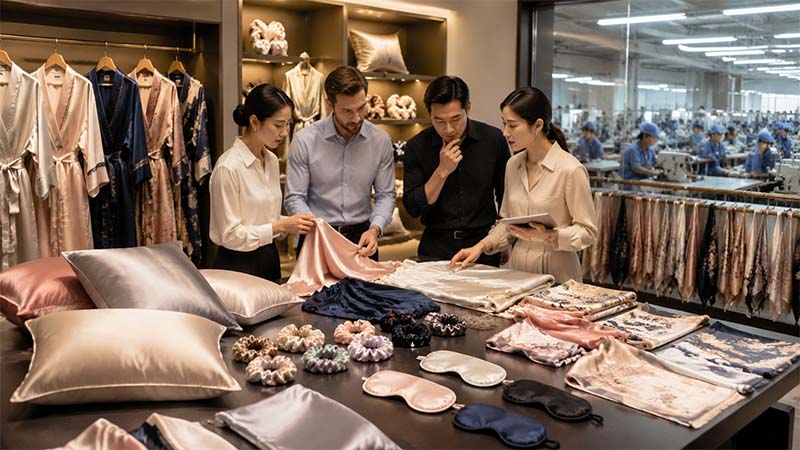
Why Choose Silkua
If YOU are planning a custom silk project and want to work directly with a silk custom manufacturing factory, Silkua is ready to help. Contact us to discuss your product requirements, sampling plan, and bulk order needs.
Request An Instant Quote For Your Brand!
You May Also Find These Topics Interesting
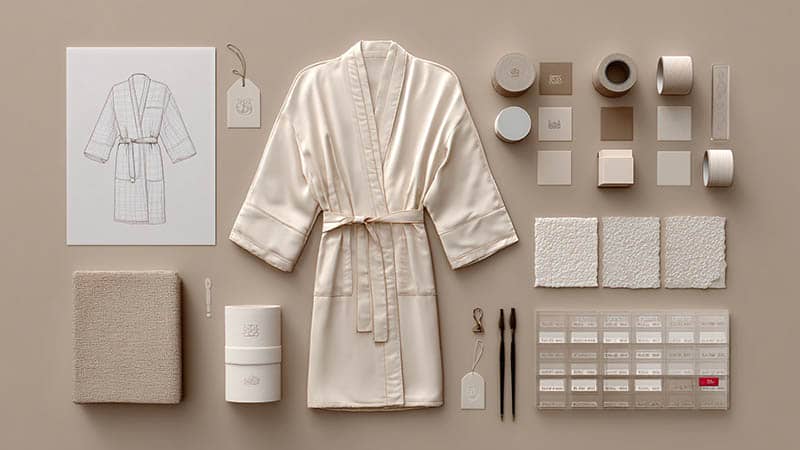
Silk Robes OEM Guide: How to Create a Private Label Loungewear Collection
Silk Robes OEM Guide: How to C
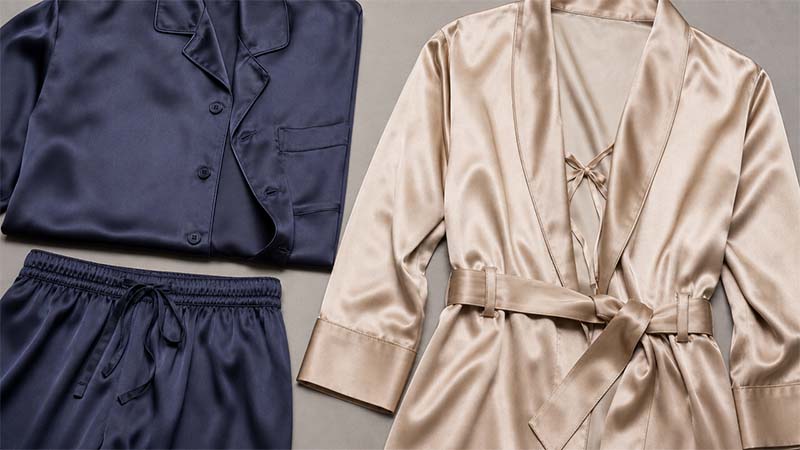
How to Choose the Right Closure for Silk Pillowcases, Pajamas, and Robes
How to Choose the Right Closur
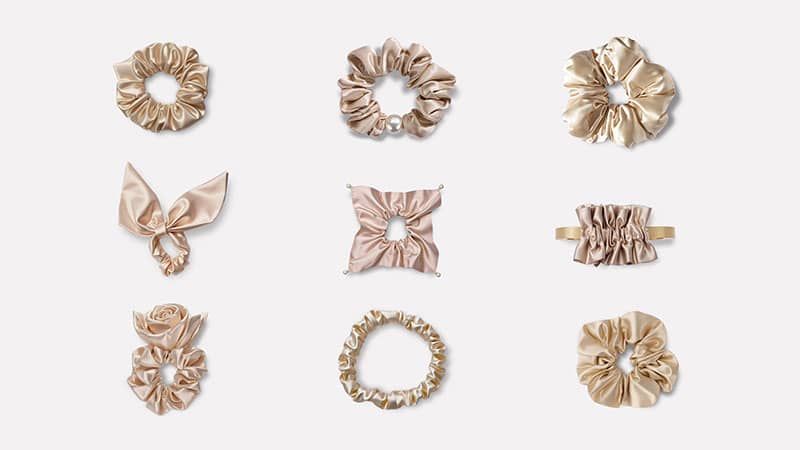
Custom Silk Scrunchies: The Ultimate OEM Guide for Beauty & Hair Brands
Custom Silk Scrunchies: The Ul