
Silk Sleepwear Manufacturing Timeline: How Long Production Really Takes (So YOU Can Plan With Confidence)
If YOU’re sourcing silk sleepwear for a launch or replenishment, the biggest risk is not always unit cost—it’s unreliable timing. This guide walks YOU through the real silk sleepwear manufacturing timeline from development to delivery, so YOU can set accurate ETDs, protect cash flow, and avoid missed selling seasons. YOU’ll see where lead time expands (fabric, lab dips, sampling, QC, and shipping), what milestones a factory should confirm in writing, and how YOU can shorten the schedule without cutting quality. Whether YOU’re working with a custom silk pajamas manufacturer in China, evaluating wholesale silk robes options, or starting with a custom silk nightgown manufacturer lead time estimate, this timeline helps YOU plan like a professional buyer.
What A Manufacturing Timeline Really Includes
A timeline is not just “days on the sewing line.” It includes fabric preparation, sample development, approvals, production scheduling, inspection, packing, and logistics. Many disputes happen when a supplier’s “lead time” starts only after YOU approve key items, while YOU assume it starts from deposit or inquiry.
To stay in control, ask your factory for milestone dates: fabric arrival, sample completion, bulk cutting, sewing start, inspection window, and ex-factory date.
How Long Silk Sleepwear Production Takes End-To-End
For many projects, a realistic range is 6–12 weeks from final approvals to goods ready to ship. If YOU require custom color, new pattern blocks, or multiple sample rounds, plan 10–14 weeks. That’s the most useful answer to “how long production really takes,” because it reflects the full process—not just sewing.
If YOU’re planning delivery commitments for wholesale buyers, add buffer time for peak-season capacity and logistics congestion.
Ask for Quote Now
Why Lead Time Varies: The Three Drivers YOU Can Manage
Lead time moves mainly because of (1) fabric status, (2) sampling cycles, and (3) YOUR approval speed. A capable manufacturer can accelerate sewing, but they cannot ship without approved fabric, trims, and packaging.
If YOU want predictable outcomes with an OEM/ODM partner, reduce variables early: lock fabric, lock sizing, and lock packaging requirements before bulk cutting.
Fabric Preparation: The Real Bottleneck In Many Silk Programs
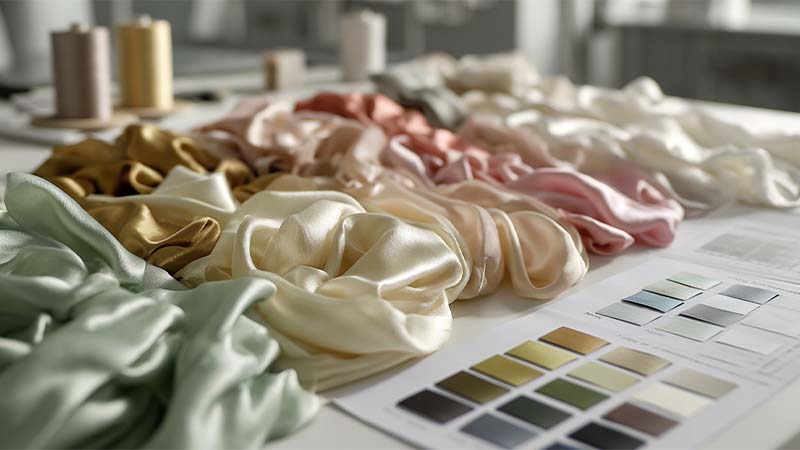
Silk is premium and sensitive, so fabric often controls the schedule. Even if material is available, mills still need time for inspection, dyeing, and finishing. If YOU’re using custom colors, the fabric timeline expands because bulk dyeing can’t begin until color is approved.
Before YOU confirm dates with any China supplier, clarify whether fabric is stock, reserved, or made-to-order—and whether finishing (like sandwashed feel) adds extra days.
Lab Dips And Color Approval: Small Decisions, Big Delays
Color approval is a frequent timeline leak. The lab dip process requires consistent lighting review and clear pass/fail feedback. “Almost correct” comments often trigger extra rounds and push bulk dyeing later.
To stay on schedule, YOU should set a shade tolerance and respond within a defined review window, especially if YOU’re coordinating multiple SKUs under one palette.
Tech Pack Readiness: How YOU Prevent Costly Rework
Factories move faster when YOUR documentation is complete. A strong tech pack includes measurement charts, grading rules, seam/stitch specs, BOM, labeling text, and packing instructions. If YOU provide partial specs, the factory fills gaps with assumptions—and assumptions create rework.
This matters most when YOU’re building an OEM program and need consistent repeats across future seasons.
Sampling: What It Includes And How Many Rounds YOU Should Expect
Sampling usually includes an initial sample, a fit revision, and a pre-production sample (PPS). This is where YOU lock fit, drape, construction, and finishing—so bulk production does not become a correction cycle.
If YOU’re developing custom silk pjs, sampling can take longer than expected because fit issues may affect both top and bottom. A custom silk nightgown manufacturer may also need extra validation for drape and length accuracy, depending on the cut.
Typical Sampling Turnaround Times (Realistic Benchmarks)
A practical benchmark is 7–15 days per sample round, plus courier time. Sampling slows when feedback is fragmented, approvals are delayed internally, or core materials change mid-round.
To shorten the cycle, consolidate feedback into one comment list with measurable targets, approve decisively, and avoid late silhouette changes after PPS.
OEM Vs ODM: Choosing The Model That Fits YOUR Speed
OEM is ideal when YOU already have a complete tech pack and want exact execution. ODM can reduce early development time if YOU want the factory to propose proven blocks, constructions, or material options. Either model can be fast—if responsibilities and approvals are clear.
If YOU’re evaluating a China OEM/ODM silk factory, ask them to define what starts after deposit versus what starts after final approval. That single clarification prevents most lead-time misunderstandings.
Bulk Production: What Happens After YOU Approve PPS
Once PPS is approved and all materials are in-house, bulk production often takes 10–25 days, depending on quantity, complexity, and capacity. The common reason schedules slip here is not slow sewing—it’s late changes that force re-cutting, re-labeling, or re-packing.
If YOU need stable delivery for retail or wholesale timelines, freeze key decisions before cutting: measurements, fabric, labels, and packaging format.
Quality Control: The Step That Protects YOUR Brand
QC should be built into the schedule, not added at the end. Inline checks catch measurement drift, seam puckering, stains, and shade mixing before they spread across cartons. Final inspection verifies appearance, measurements, labeling, folding, and carton integrity.
If YOU’re working with a silk pajama sets supplier or onboarding a new manufacturer, request QC checkpoints and clarify what happens if rework is needed—how long it takes and who approves the fix.
Packaging And Labels: The Quiet Reason “Ready Goods” Don’t Ship
Packaging has its own lead time: woven labels, care labels, hangtags, polybags, inserts, and cartons require approval and production. Missing one component can block shipment even when garments are finished.
This is especially relevant for wholesale silk robes programs, where belt packing, hanger options, or gift-ready boxes can become last-minute constraints if not planned early.
Shipping From China: Transit Time Is Only One Part Of Delivery
Shipping includes freight booking, export documentation, customs clearance, and last-mile scheduling. Air is faster but costly; sea is slower but budget-friendly. During peak seasons, booking delays can add time even when production finishes on schedule.
If YOU’re planning shipping from China, book freight while packing is still in progress so YOUR cartons do not sit at the factory waiting for space.
How Category Impacts Timeline: Pajamas Vs Robes Vs Nightgowns
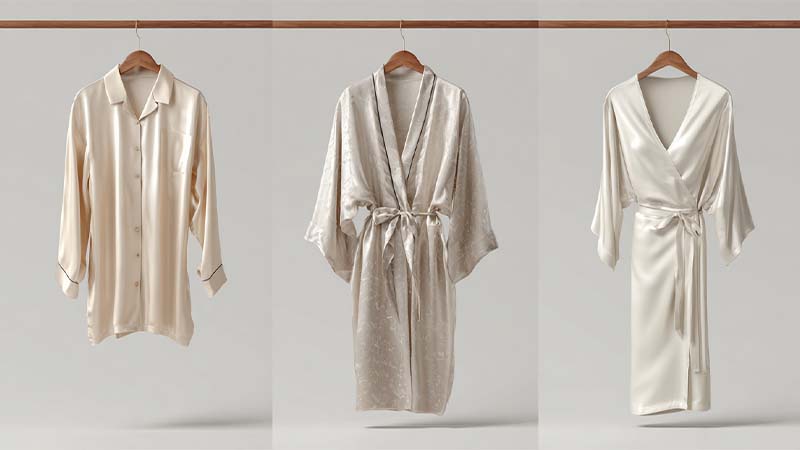
Different products create different risks. Two-piece pajama sets require tight measurement control across multiple panels. Robes often add trims and belt components that must be produced and packed correctly. Nightgowns can be highly sensitive to drape and hem accuracy.
If YOU’re requesting quotes, ask for a category-specific timeline—especially when YOU’re comparing a custom silk pajamas manufacturer in China with a wholesale silk robes manufacturer in China or assessing a new custom silk nightgown manufacturer lead time.
The Questions YOU Should Ask Before Paying A Deposit
Before YOU pay, get clear answers in writing:
- When will fabric arrive, and is custom dyeing/finishing required?
- How many sample rounds are included, and what is turnaround per round?
- What is bulk production time at YOUR quantity tier?
- What QC steps are included, and what is the rework window?
- What does “lead time” start from—deposit or final approvals?
- Who books freight, and what shipping method is assumed?
A professional supplier will provide a milestone schedule instead of vague promises.
How YOU Can Shorten Lead Time Without Sacrificing Quality
The safest time savings come from preparation and decision speed—not from skipping inspection. To shorten lead time responsibly, YOU should:
- Provide complete specs and tolerances upfront
- Limit colorways and SKUs in the first run
- Approve lab dips and samples on a fixed SLA
- Lock packaging and labels before bulk cutting
- Schedule inspection windows early
This keeps quality stable and improves delivery predictability.
A Timeline Template YOU Can Use To Plan Backwards
Use this model to plan backwards from YOUR target ship date:
- Weeks 1–2: Specs confirmed + fabric plan + lab dips requested
- Weeks 2–5: Sampling + PPS approval (1–3 rounds)
- Weeks 4–8: Bulk fabric preparation + trims/packaging production
- Weeks 6–10: Bulk cut & sew + inline QC
- Weeks 9–12: Final inspection + packing + freight booking + shipment
If YOU add custom dyeing, many SKUs, or peak-season production, plan closer to 14 weeks.
Ready To Lock Your Timeline And Get A Reliable Quote?
If YOU want dates YOU can sell against, move now while capacity is available. Contact Us and share YOUR target ship date, estimated quantities, and product requirements (or your tech pack if available). Silkua will respond with a milestone-based production plan and a clear quotation—so YOU can reserve capacity earlier, reduce delays, and launch on time. Fill out the inquiry form today to secure the fastest workable production window.