

Quick Answer: What Is Color Fastness In Silk?
Color fastness in silk means how well silk fabric keeps its color during washing, rubbing, sweating, light exposure, and daily use. For private label brands, good color fastness helps prevent fading, bleeding, staining, color transfer, customer complaints, and product returns.
If you are developing silk pillowcases, pajamas, robes, scarves, bonnets, sleep masks, or silk scrunchies, color fastness should be checked before bulk production. It is not only a technical testing point. It directly affects how customers judge your product quality.
Table of Contents
Why Color Fastness Matters For Private Label Silk Products
Color fastness matters because your customer experiences the product after delivery, washing, sleeping, wearing, and daily use.
A silk product may look beautiful in photos and samples, but if the color fades after washing or stains another fabric, the customer will see it as a quality problem. They usually will not separate the issue from dyeing, printing, or factory processing. They will connect the issue directly with your brand.
For private label brands, poor color fastness may cause:
- More product returns
- Negative customer reviews
- Retailer rejection
- Lower repeat purchase rates
- Higher customer service costs
- Damage to brand trust
In simple terms, stable color performance protects both your product and your brand reputation.
What Color Fastness Means In Textile Quality
Color fastness is a textile quality measurement. It shows how resistant a fabric color is under different conditions.
A fabric may be tested for:
- Washing
- Rubbing
- Perspiration
- Light exposure
- Water
- Dry cleaning
- Heat or ironing
Each test reflects a real customer use situation. For example, a silk pillowcase needs good rubbing and washing performance. A silk scarf may need better light fastness. A silk camisole or robe may need good perspiration fastness because it touches the skin.
This is why you should not ask only whether the color “looks good.” You should ask whether the color can perform well in the way the product will actually be used.
Ask for Quote Now
Subscribe to Product Updates
Silk care tips and new arrivals — straight to your inbox.
Why Silk Needs Careful Color Fastness Control
Silk is a natural protein fiber. It is soft, smooth, breathable, and luxurious, but it also requires careful dyeing, printing, washing, and finishing.
Compared with some synthetic fabrics, silk can be more sensitive to:
- Water temperature
- Detergent
- Friction
- Sweat
- Sunlight
- Chemical treatment
- pH level
This does not mean silk is weak. It means silk needs professional production control.
When silk is processed correctly, it can offer both premium comfort and stable color performance. When it is processed poorly, it may bleed, fade, or transfer color more easily.
Silk Vs Polyester Satin: Which Has Better Color Fastness?
Polyester satin and silk may look similar in photos, but they are different materials with different performance.
Factor | Silk | Polyester Satin |
Fiber Type | Natural protein fiber | Synthetic fiber |
Feel | Soft, breathable, premium | Smooth and shiny, but less breathable |
Dyeing Process | Requires careful control | Usually easier to dye |
Cost Level | Higher | Lower |
Brand Positioning | Premium and luxury | Budget or promotional |
Color Risk | Depends heavily on process control | Usually easier to stabilize |
Best Use | Premium sleepwear, pillowcases, scarves, robes, accessories | Low-cost satin accessories or promotional items |
If you are comparing silk vs polyester satin for private label scrunchies, pillowcases, or scarves, do not compare price only.
Polyester satin may be more cost-efficient, but silk offers stronger premium value. If your goal is to build a higher-end product line, silk can be the better choice, as long as color fastness and quality control are managed properly.
Main Types Of Color Fastness Tests For Silk
Color fastness includes several test types. Each one checks a different risk.
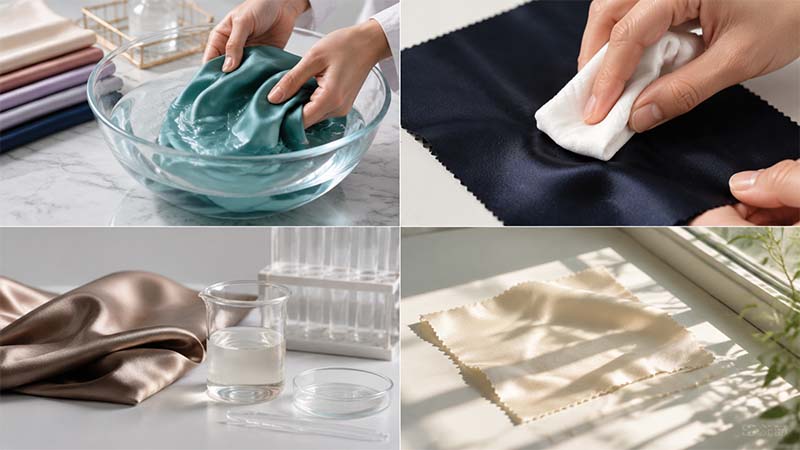
Color Fastness To Washing
Color fastness to washing measures whether silk changes color or stains other fabrics during washing.
This is important for silk pillowcases, pajamas, robes, bonnets, scrunchies, bed sheets, and sleep masks. These products often touch water, detergent, skin oils, and hair care products.
If washing fastness is poor, the color may fade or bleed after only a few washes.
Color Fastness To Rubbing
Color fastness to rubbing measures whether color transfers from the fabric surface when rubbed.
This test is important for dark silk products, silk pillowcases, bonnets, scarves, headbands, and scrunchies. These items often touch skin, hair, bedding, or clothing.
Rubbing can be tested in dry and wet conditions. Wet rubbing is usually more difficult because moisture can increase color transfer.
Color Fastness To Perspiration
Color fastness to perspiration measures how silk reacts to sweat.
Sweat contains moisture, salt, and different pH levels. It can affect dye stability, especially on products worn close to the skin.
This test matters for silk camisoles, robes, pajamas, scarves, eye masks, headbands, and lingerie.
Color Fastness To Light
Color fastness to light measures how well silk resists fading from sunlight or strong artificial light.
This matters for silk scarves, dresses, shirts, robes, home textiles, and products displayed in retail stores.
Some light colors, bright colors, and delicate printed shades may require extra attention.
Why Dark Silk Colors Need More Testing
Dark silk colors often have a higher risk of bleeding or rubbing off because they require more dye.
Common high-risk shades include:
- Black
- Navy
- Burgundy
- Red
- Purple
- Emerald
- Deep brown
These colors are popular for premium silk products, but they need better process control.
For dark silk colors, you should confirm:
- Dyeing method
- Color fixation process
- Washing process after dyeing
- Rubbing fastness
- Washing fastness
- Care label instructions
A dark silk product can be high quality, but you should not approve bulk production based only on appearance. You should also confirm performance.
How Printing Affects Color Fastness In Silk
Printing can increase color fastness risk because printed colors must properly bond with the silk surface.
Common silk printing methods include:
- Digital printing
- Screen printing
Digital printing is useful for detailed artwork, gradients, small-batch designs, and allover print silk products. Screen printing can be suitable for repeat patterns, simple artwork, and larger production programs.
For custom printed silk products, you should request a printed strike-off sample before bulk production. This helps you check:
- Pattern accuracy
- Color matching
- Print clarity
- Hand feel
- Color transfer risk
- Overall appearance
If you are making allover print silk scrunchies, scarves, robes, or sleep accessories, this step is especially important.
Does Higher Momme Mean Better Color Fastness?
Higher momme does not automatically mean better color fastness.
Momme measures the weight and density of silk fabric. For example:
- 16 momme silk is lighter
- 19 momme silk is commonly used for pillowcases
- 22 momme silk feels more substantial
- 25 momme silk is heavier and more premium
Higher momme may improve durability and luxury feel, but color fastness still depends on dyeing, printing, fixation, washing, and finishing.
You should choose momme based on product type, target price, and customer expectations. Then you should confirm color fastness separately.
What Color Fastness Grade Is Good For Silk?
Color fastness is often rated from Grade 1 to Grade 5.
- Grade 5: Excellent
- Grade 4: Very good
- Grade 3: Acceptable for many uses
- Grade 2: Weak
- Grade 1: Poor
For many private label silk products, Grade 3-4 or above is often a practical target. However, the right grade depends on product type, color depth, care method, and market expectations.
For example, a dark silk pillowcase may need stronger rubbing fastness than a light-colored decorative scarf. A silk camisole may need better perspiration fastness than a gift-packaged accessory.
The best standard is the one that matches real customer use.
Checklist: What To Ask Your Silk Manufacturer Before Production
Before you place a private label silk order, ask your manufacturer these questions:
- What silk fabric and momme weight do you recommend?
- What dyeing or printing method will be used?
- Can you provide lab dips for solid colors?
- Can you provide printed strike-offs for custom artwork?
- What color fastness grade can you normally achieve?
- Do dark colors need extra testing?
- How do you control dye lot consistency?
- What care instructions do you recommend?
- Can you provide test reports if required?
- How do you inspect bulk products before shipment?
- Can you support custom logo and private label packaging?
This checklist helps you compare suppliers more clearly and avoid quality problems before they happen.

Step-By-Step Process To Reduce Color Fastness Problems
Step 1: Define Product Use
First, define how the silk product will be used.
A pillowcase, scarf, robe, pajama set, and scrunchie all face different use conditions. Product use determines which color fastness tests matter most.
Step 2: Choose The Right Fabric
Select silk type and momme weight based on your product positioning.
For example, a premium pillowcase may need a heavier momme, while a cost-efficient silk scrunchie may use a lighter silk.
Step 3: Approve Lab Dips Or Strike-Offs
Use lab dips for solid colors and strike-offs for printed designs.
This helps you confirm color, artwork, and appearance before bulk production.
Step 4: Confirm Care Instructions
Your care label should match the actual fabric performance.
Do not promise machine washing unless the product can truly support it.
Step 5: Review Pre-Production Samples
Step 6: Inspect Before Shipment
Final inspection should check appearance, color matching, workmanship, packaging, and any agreed testing requirements.
This process helps you reduce customer complaints, product returns, and quality disputes.
Common Color Fastness Problems And Causes
Problem | Possible Cause |
Silk color bleeds during washing | Poor fixation, wrong detergent, high water temperature |
Dark silk stains bedding | Weak rubbing fastness or insufficient washing after dyeing |
Printed silk fades quickly | Poor print fixation or unsuitable printing method |
Color looks different from sample | Dye lot variation or poor color control |
Silk looks dull after washing | Wrong finishing process or improper care instructions |
Color transfers to packaging | Surface dye residue or poor rubbing fastness |
This table can help you identify the possible reason behind common quality issues.
How Color Fastness Affects Customer Reviews
Customers usually do not use technical words like “color fastness.” Instead, they write reviews such as:
- “The color faded after washing.”
- “It stained my pillowcase.”
- “The dark color rubbed off.”
- “The print became dull.”
- “It looked beautiful at first but did not last.”
These reviews can hurt conversion rates because future buyers often trust customer feedback more than product descriptions.
Good color fastness helps your products stay attractive for longer, which can support better reviews, fewer returns, and stronger repeat purchases.
Why Dye Lot Consistency Matters For Private Label Brands
Dye lot consistency means your sample, bulk order, and repeat order stay close in color.
This is important if you sell:
- Matching silk pajama sets
- Seasonal color collections
- Reorderable bestsellers
- Retail programs
- Private label product lines
Silk is a natural fiber, so small color differences can happen if production is not controlled carefully.
A professional silk manufacturer should manage dye lot consistency through lab dips, batch control, fabric inspection, and final color checking.
Quick Summary: Key Takeaways For Buyers
Color fastness in silk is important because it affects product appearance, customer experience, and brand reputation.
Before bulk production, you should confirm:
- Fabric type
- Momme weight
- Dyeing or printing method
- Lab dip or strike-off approval
- Color fastness expectations
- Care instructions
- Bulk inspection process
- Dye lot consistency
- Packaging and shipment protection
If you are building private label silk products, color fastness should be discussed during sampling, not after production is finished.
FAQ: Color Fastness In Silk
What Does Color Fastness Mean In Silk?
Color fastness means how well silk keeps its color during washing, rubbing, sweating, light exposure, and daily use.
Why Does Silk Bleed Color?
Silk may bleed color when dyeing, fixation, washing, or finishing is not properly controlled. Dark colors and printed designs usually need extra attention.
Is Silk More Likely To Fade Than Polyester Satin?
What Is A Good Color Fastness Grade For Silk?
Grade 3-4 or above is often practical for many private label silk products, but the exact requirement depends on product type, color, use condition, and care method.
Should You Test Color Fastness Before Bulk Production?
Yes. Testing is especially useful for dark colors, bright colors, printed designs, skin-contact products, and retail programs.
Can Custom Printed Silk Have Good Color Fastness?
Yes. Custom printed silk can perform well if the printing method, ink, fixation, washing, and finishing are properly controlled.
Does Higher Momme Improve Color Fastness?
Not directly. Higher momme improves fabric weight and durability, but color fastness mainly depends on dyeing, printing, fixation, and finishing quality.
Work With A Silk Manufacturer That Understands Color Quality
Color fastness is not just a testing term. It affects how your product looks, feels, sells, and performs after customers use it.
If you are developing private label silk pillowcases, pajamas, robes, scarves, bonnets, sleep masks, scrunchies, or other silk accessories, you need a manufacturer that understands both silk production and quality control.
At Silkua, you can develop custom silk products with fabric selection, color development, printing, embroidery, private label packaging, sampling, and bulk production support.
Contact Silkua For Custom Silk Product Development
If you want your silk products to look premium and perform well in real use, discuss color fastness before production starts.
Contact Us today to share your product idea, quantity, fabric requirement, artwork, packaging needs, and destination country. Silkua can help you recommend suitable silk options, reduce quality risks, and provide a custom quote quickly.
Start now to prevent color problems before they become customer complaints.
Request An Instant Quote For Your Brand!
You May Also Find These Topics Interesting

The Ultimate Guide to Custom Heatless Hair Curlers for Beauty Subscription Boxes
The Ultimate Guide to Custom H
What Makes A Silk Supplier Suitable For Small And Growing Brands?
What Makes A Silk Supplier Sui
Peace Silk (Ahimsa) vs Mulberry Silk: Ethics, Performance, and Cost
Peace Silk (Ahimsa) vs Mulberr