
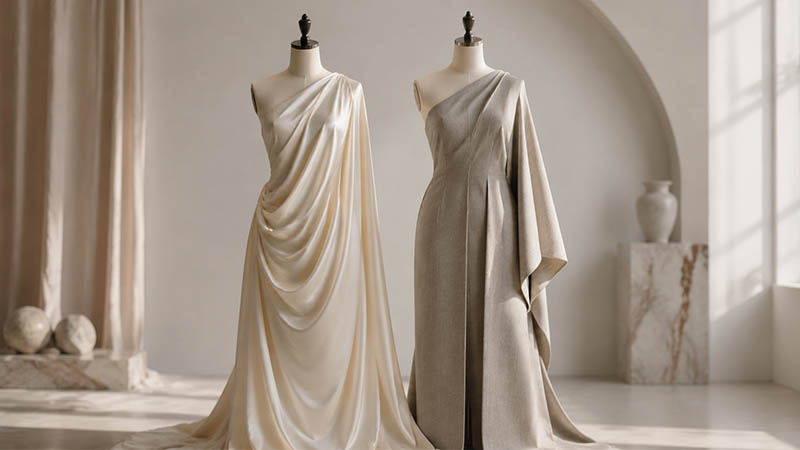
When YOU develop dresses, robes, or camisoles, fabric choice affects more than texture or fiber content. One of the most important factors is drape, because drape influences how a garment hangs, moves, and feels in actual wear. A fabric may look promising on a swatch, but if it does not fall correctly, the final product can feel stiff, flat, or misaligned with your design direction.
This guide gives YOU a practical look at fabric drape explained in clear terms. YOU will learn what fabric drape means, what affects fabric drape, how to compare soft and structured materials, and which fabrics usually work best for different categories. If YOU are choosing materials for dresses, robes, or camisoles, this article will help YOU make better product decisions with both design goals and market expectations in mind.
Table of Contents
What Does Fabric Drape Mean?
Fabric drape refers to the way a textile falls under its own weight. Some fabrics flow close to the body and create soft folds. Others hold their shape more firmly and form a cleaner, more structured outline.
For YOU as a brand, drape is not a minor detail. It influences how premium a garment looks, how comfortable it feels, and how well the silhouette matches the intended product story. In simple terms, the difference between soft drape vs structured drape can completely change the identity of a dress, robe, or camisole.
Why Does Fabric Drape Matter In Product Development?
Drape matters because design sketches do not exist in isolation. The real garment only works when the material supports the silhouette YOU want to achieve. A fluid slip dress needs movement. A robe often needs softness and elegance. A camisole usually performs best when the fabric falls cleanly without bulk.
This is also where how drape affects garment silhouette becomes important. If the drape is too rigid, a style may feel heavy or awkward. If it is too soft, the garment may lose shape or fail to deliver the intended structure. Good product development depends on matching drape to end use.
What Affects Fabric Drape?
Many brands assume fiber alone determines drape, but that is only part of the answer. Fabric weight, yarn type, weave construction, thickness, finishing, and surface texture all influence how a fabric behaves.
That is why any serious guide on what affects fabric drape should go beyond fiber labels. A lightweight fabric does not always drape better than a mid-weight one. Some light fabrics feel crisp rather than fluid, while some slightly heavier fabrics fall in a smoother and more polished way. YOU should assess drape based on real garment behavior, not assumptions.
How Can You Tell Whether A Fabric Has Good Drape?
The simplest way to judge drape is to see how the fabric hangs and folds in motion. If it falls in rounded lines and follows movement naturally, it likely has softer drape. If it stands away from the body or keeps sharper angles, it usually creates more structure.
A swatch can offer an early impression, but prototypes give YOU a more reliable answer. If YOU want to understand how to tell if a fabric has good drape, test it in a panel, on a dress form, or in a sample garment. That is the most practical way to evaluate performance.
Ask for Quote Now
Comparison: Which Fabrics Usually Drape Best?
There is no single universal answer, because the best drape depends on the garment category, price point, and design intent. Still, some materials are more consistently associated with fluid movement than others.
Here is a simple comparison:
- Silk usually offers refined, fluid drape with a premium feel
- Viscose often gives smooth movement and softness at a more accessible cost
- Tencel is known for a clean, modern fall and comfortable hand feel
- Cotton usually provides more shape than flow, depending on construction
- Linen often creates natural movement, but with a drier and more textured look
If YOU are comparing silk vs viscose drape, silk often feels more luxurious and elevated, while viscose can be a strong option for commercial collections that still need fluidity.

Which Fabrics Work Best For Dresses?
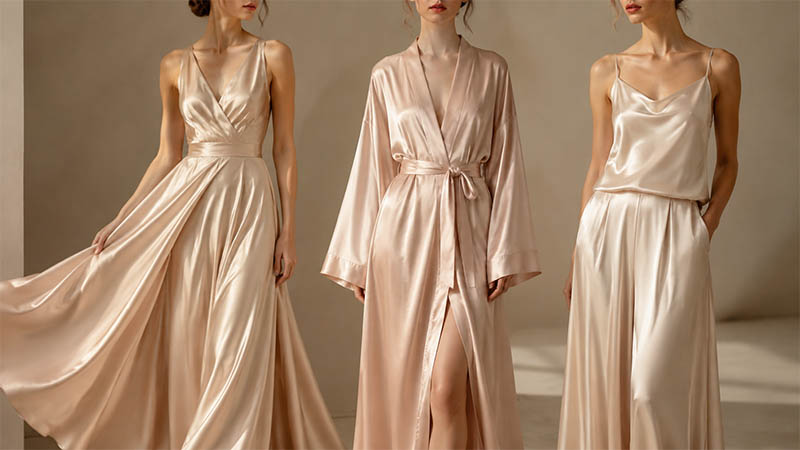
For dresses, the right answer depends on whether YOU want movement, structure, or balance. If the goal is fluid elegance, fabrics such as silk satin, silk crepe de chine, viscose, rayon, and Tencel are often strong choices. They are commonly used when brands search for the best fabric for flowing dresses.
If YOU want cleaner lines or more shape, cotton poplin, linen blends, or heavier crepes may be more appropriate. The best material is the one that supports the intended silhouette. A flowing dress should not fight against the fabric. That is why drape should be evaluated at the beginning of the development process, not after sampling problems appear.
Which Fabrics Work Best For Robes?
Robes usually need a combination of softness, comfort, and visual appeal. If YOU are developing a premium collection, silk satin and charmeuse are often associated with the best fabric for luxury robes because they create a smooth, elegant fall and a polished finish. These materials are also a strong choice for brands developing custom silk robes that need to balance comfort, drape, and a more elevated market position.
For more versatile programs, Tencel, modal, and viscose can also work well. These fabrics often provide softness and wearable drape while supporting a wider pricing strategy. If the robe is intended to feel light and indulgent, choose a fabric that moves gently and does not look bulky when wrapped or layered.
Which Fabrics Work Best For Camisoles?
Camisoles usually look best in fabrics with soft, controlled drape. Because they are worn close to the body, the material should fall smoothly and avoid stiffness. Silk satin, silk charmeuse, cupro, viscose, and Tencel are often considered the best fabric for camisoles in premium and mid-premium categories. These fabrics are especially relevant for brands developing a custom silk camisole that needs a refined silhouette and a smooth, elegant fall.
If YOU are developing delicate or bias-cut styles, the fabric choice becomes even more important. The best fabric for bias cut camisoles is usually one that can flow naturally while still staying stable enough for production. This is one reason silk and well-made viscose blends remain popular in the category.
Is Silk Always The Best Option When Drape Matters?
Silk is one of the strongest options when drape is a priority, but it is not automatically the best choice for every product. The advantage of silk fabric drape is that it often combines movement, comfort, and premium visual appeal in one material.
However, different silk constructions behave differently. Silk charmeuse can feel fluid and glossy. Silk crepe de chine often gives a softer and more controlled fall. Satin can feel rich and elegant, especially in robes and camisoles. YOU should choose the specific silk type based on silhouette, use case, and price positioning rather than selecting silk in the abstract.
Are Tencel And Viscose Good Alternatives?
Yes. Both viscose and Tencel are widely used when brands need fluid drape at a lower cost than silk. Viscose fabric drape is often soft and elegant, although quality can vary depending on yarn and finishing. Tencel fabric drape is often appreciated for its smooth surface, clean fall, and modern premium feel.
If YOU are developing multiple product tiers, these materials can give YOU flexibility. They are especially useful when YOU want softness and movement without moving fully into luxury silk pricing.
Is Cotton A Good Choice For Drape?
Cotton can work, but usually not when the main objective is highly fluid drape. Many cotton fabrics are better for shape, breathability, and casual structure than for liquid movement.
That said, cotton voile, cotton lawn, and certain blends may still suit lightweight dresses or relaxed robes. If YOU want a softer and more natural look rather than a glossy or fluid one, cotton can still be useful. The question is not whether cotton is good or bad, but whether its drape profile matches the garment direction.
A Checklist For Choosing The Right Fabric Drape
If YOU are deciding how to choose fabric drape for garment development, this checklist can help:
Define the silhouette first
Decide whether the garment should feel fluid, relaxed, shaped, or structured.Match drape to product category
Dresses, robes, and camisoles do not require the same fall or movement.Review the target customer
Premium buyers may expect silk-like movement, while commercial lines may prioritize versatility.Compare multiple materials side by side
Do not judge one fabric in isolation if YOU are building a collection.Test with real samples
Swatches are not enough. Drape should be reviewed in trial panels or prototypes.Balance design with price positioning
The best-looking fabric is not always the best commercial decision.
This is also the most practical way to understand how to source fabric with the right drape. Good sourcing decisions come from comparing performance, not only reading specifications.
FAQ
What Is The Best Fabric Drape For Dresses?
Silk, viscose, rayon, and Tencel are often strong choices for dresses that need soft movement. The best option depends on whether YOU want fluidity, structure, or a balance of both.
Which Fabric Is Best For Luxury Robes?
Silk satin and silk charmeuse are common premium choices because they combine softness, elegant drape, and a polished appearance.
What Is The Best Fabric For Camisoles?
Silk, viscose, cupro, and Tencel are often used for camisoles because they fall smoothly and support a refined silhouette.
Does Fabric Weight Affect Drape?
Yes, but weight is only one factor. Construction, thickness, finishing, and surface texture also influence how a fabric hangs.
How To Turn Fabric Drape Knowledge Into Better Product Decisions
Understanding drape helps YOU make better decisions across dresses, robes, and camisoles. The right material improves movement, silhouette, comfort, and product perception. The wrong one can weaken a good concept before it reaches production.
If YOU are comparing materials and need expert guidance on fabric sourcing for dresses and robes, Silkua can help. We work with brands to assess silk, Tencel, viscose, and other fabric directions based on product goals, comfort expectations, and market positioning. Contact Us today to discuss your collection, request fabric advice, or get a custom quote from Silkua before moving into sampling.
Request An Instant Quote For Your Brand!
You May Also Find These Topics Interesting
Why Antibacterial Silk Pillowcases Are a Must-Have for Acne-Prone Skin
Why Antibacterial Silk Pillowc
Bulk Silk Pillowcases for Hotel Chains: How to Customize for Hospitality Brands
Bulk Silk Pillowcases for Hote
Tencel vs. Bamboo vs. Mulberry Silk: Which Fabric Is Best for Antimicrobial Protection and Everyday Use?
Tencel vs. Bamboo vs. Mulberry