

You want your silk dress or robe to glide, breathe, and last. The lining decides all three. In this guide, YOU will compare cupro, viscose, and silk across comfort, drape, static control, durability, care, sustainability, and cost. You’ll get exact GSM and weave suggestions, construction tips to avoid puckering and cling, and a clear decision path for bridal, eveningwear, or loungewear. By the end, you’ll know which lining to pick, how to spec it for your factory, and what to ask suppliers to protect quality and margins.
Table of Contents
What Makes A Great Lining For Silk?
A great lining should disappear in wear yet elevate performance. YOU need:
- Breathability and moisture transfer to keep skin dry.
- Low friction so the silk shell hangs cleanly.
- Compatible drape to prevent torque and seam stress.
- Colorfastness and care alignment with the silk outer.
- Traceability options that fit your brand’s sustainability goals.
Cupro, viscose, and silk all work—but each fits different priorities and price points.
How Do These Linings Feel Against Skin?
- Cupro: Cool, smooth, and low-cling. It glides under charmeuse and crepe without grabbing.
- Viscose: Soft and breathable but can feel damp in humidity; some cling if un‑finished.
- Silk: Luxurious and thermo‑regulating; the most “skin-friendly” hand for robes. It’s the go-to when YOU want the interior to match the shell of a mulberry silk robe.
Your call: choose silk for ultimate luxury, cupro for cool glide and value, viscose for budget comfort.
Which Option Breathes And Manages Moisture Best?
- Cupro: Excellent moisture uptake and wicking; keeps YOU drier during events.
- Viscose: Highly absorbent but slower to move moisture out, so clamminess can linger.
- Silk: Naturally breathable and balances microclimate well.
Pick cupro or silk for warm venues, stage lights, or summer weddings. Use viscose in temperate settings or cost-driven capsules.
How Do They Drape Under Silk Shells?
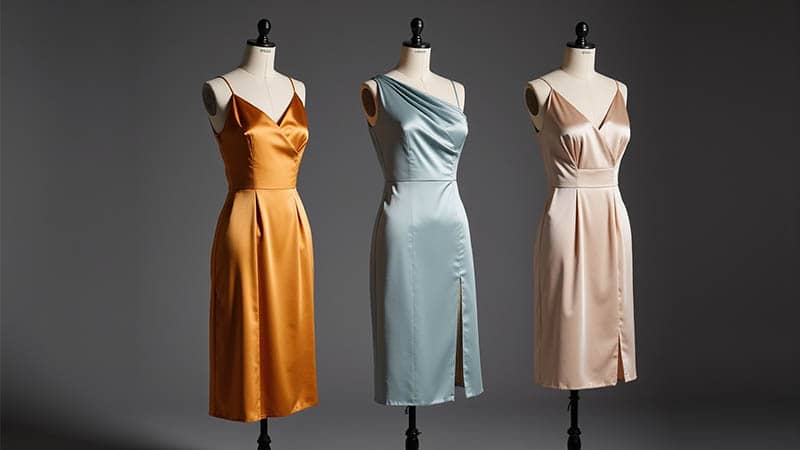
- Cupro: Fluid with gentle body; stabilizes bias cuts and reduces twist.
- Viscose: Very fluid but prone to “growth” and seam slippage if under‑specified.
- Silk: Mirrors the shell perfectly—silk-on-silk gives the purest fall, especially under an embroidery silk dress where stitch density can add micro‑rigidity.
For bias gowns, use cupro or silk. For structured dresses, cupro adds control. For ultra-fluid silhouettes, silk wins.
Ask for Quote Now
Will YOU Get Static, Cling, Or Ride‑Up?
- Cupro: Low static and cling; hems stay calm under satin.
- Viscose: Moderate static in dry climates; needs anti‑static finish.
- Silk: Naturally low static, especially with slight ambient humidity.
To minimize ride‑up and cling, choose cupro or silk, or specify anti‑static on viscose.
How Durable Are These Linings In Real Wear?
- Cupro: Strong for its weight; resists pilling and seam slippage at proper GSM.
- Viscose: Can weaken when wet; low-GSM twills may pill or slip without stitching controls.
- Silk: Strong-to-weight but snag-prone; protect from rough zips and trims.
For frequent-wear robes or rental pieces, cupro offers the best durability-to-cost. Silk lasts if handled gently; viscose needs stricter construction.
How Easy Are They To Care For?
- Cupro: Dry clean preferred; many finishes survive gentle hand-wash with minimal distortion.
- Viscose: Weak when wet; most reliably dry clean to avoid shrinkage.
- Silk: Typically dry clean; some pre-shrunk qualities hand-wash, but dye migration is a risk.
Choose cupro if YOU want practical care with premium feel. Choose silk for heirloom pieces that will be dry cleaned.
What’s The Sustainability Picture?
- Cupro: Regenerated from cotton linter with modern closed-loop production that captures and reuses solvents.
- Viscose: Environmental impact varies by source and chemical recovery; ask for traceability and responsible forestry compliance.
- Silk: Natural protein fiber with low microplastic risk; assess farm practices, dye houses, and animal-welfare standards.
For a balanced footprint and performance, pick verified closed-loop cupro or responsibly sourced viscose. For luxury SKUs, traceable silk is compelling.
How Do Costs Compare For Production?
- Cupro: Mid to premium; below silk, above generic viscose.
- Viscose: Most budget-friendly; upgraded finishes add cost but remain economical.
- Silk: Highest cost, especially for tight-tolerance linings like crepe de chine.
If YOU must hit aggressive targets, viscose is viable. For premium value, cupro excels. For no-compromise luxury, silk is the benchmark. Build these choices into your Silk Garment Costing to balance fabric, finishing, and make complexity without compromising drape or durability.
Ask for Quote Now
What GSM And Weave Should YOU Specify?
- Cupro: 70–90 gsm twill for dresses; 50–70 gsm plain for slips and bias gowns; 90–110 gsm for robes needing opacity.
- Viscose: 80–100 gsm twill for stability; 60–80 gsm plain for airy dresses; avoid <55 gsm to limit seam slippage.
- Silk: 12–16 momme habotai or crepe de chine for dresses; 16–19 momme for premium robes and structured linings.
Request test data on your exact lot: shrinkage (<2%), colorfastness, seam slippage (ISO 13936), and pilling (Martindale).
How Should YOU Match Color And Finish?
- Color: Slightly darker than shell to mask seams; nude for sheer shells; dye-to-match for bridal.
- Finish: Anti‑static for viscose; peached or sandwashed cupro for whisper-soft glide; sandwashed silk to reduce show‑through.
- Opacity: For light shells, increase GSM or use interlining at bust and skirt to avoid shadow lines.
What Construction Choices Prevent Puckering?
- Needles/Thread: Microtex 60/8–70/10 with fine polyester thread to reduce drag.
- Seams: French seams or narrow overlock; understitch facings to control roll.
- Ease: Add 1–3% lining ease at hips and seat; cut on the same grain as shell to reduce torque.
- Stabilization: Use silk organza at armholes, necklines, and zippers; hang bias garments 24 hours before hemming.
How to choose the right lining?
1.When Should YOU Choose Cupro?
Choose cupro when YOU need a cool, non‑cling lining for hot venues, bias stability without bulk, strong value below silk, and better wet stability than viscose. It’s ideal for custom silk dress projects that require precise drape control without pushing costs into couture territory.
2.When Should YOU Choose Viscose?
Choose viscose when YOU prioritize budget, fluidity for gathers/pleats, or short fashion cycles. Add anti‑static and shrink‑control finishes. Reinforce seams and avoid ultra-low GSM.
3.When Should YOU Choose Silk?
Choose silk when YOU want couture-level drape, skin comfort, and heirloom appeal—bridal, red carpet, or premium robes. It’s the natural partner for a china silk dress or a printed silk robe where shell and lining must move as one.
What Should YOU Ask Your Fabric Supplier?
- Do you offer closed-loop cupro or responsibly sourced viscose with documentation?
- What GSM, weave, and finish do you recommend for my silhouette and climate?
- Can you provide test reports for shrinkage, slippage, colorfastness, and pilling?
- What is dye-lot variation and lead time? Can I approve lab dips and hand-feel swatches?
- Will the finish survive five dry-clean cycles without losing hand or anti‑static effect?
Ask for Quote Now
Quick Decision Guide For Fast Spec’ing
- Hot venues + bias cut + premium feel: Cupro twill 70–90 gsm.
- Budget capsule + pleats/gathers: Viscose twill 80–100 gsm with anti‑static.
- Bridal/couture + heirloom: Silk 12–16 momme CDC or 16–19 momme for robes.
- Sensitive skin + anti‑cling priority: Cupro or silk, peached/sandwashed finish.
Common Pitfalls YOU Should Avoid
- Using ultra-light viscose under heavy silk shells—expect seam slippage.
- Skipping anti‑static on viscose in dry seasons—hems ride up.
- Under‑spec GSM for robes—leads to show‑through and cling.
- No wear test—always simulate 30 minutes of movement before bulk.
Final Recommendation

If YOU want one versatile lining for most silk dresses and robes, choose cupro twill at 70–90 gsm with anti‑static and shrinkage under 2%. Upgrade to silk when the brief is pure luxury and skin feel is paramount. Use responsibly sourced viscose for budget-sensitive styles with good finishing and construction controls. This approach scales whether you’re developing personalized silk robes for gifting, custom silk robes for bridal parties, wholesale silk robes for retailers, or planning bulk silk robes for hotels and spas.
Get Your Custom Lining Plan With Silkua Today
Ready to elevate your collection with smoother drape and happier customers? Fill out the inquiry form with Silkua now for a custom lining shortlist, free swatches, and a tailored quote in 24 hours. Secure optimized GSM, responsible sourcing, and production-ready specs—contact us today to reserve capacity and reduce returns on your next drop.
Request An Instant Quote For Your Brand!
You May Also Find These Topics Interesting
Bulk Silk Fabric Dyeing: How to Control Color, Tolerance, and Lead Time
Bulk Silk Fabric Dyeing: How t
Silk Pillowcase Sizes Explained: Standard, Queen, King, And Custom Dimensions By Region
Silk Pillowcase Sizes Explaine

How to Choose the Right Silk Fabric for Custom Sleepwear Manufacturing?
How to Choose the Right Silk F