
You want the beauty, comfort, and longevity of true silk—without paying premium prices for look‑alike synthetics. In this guide, YOU get practical, fast checks to verify authenticity in stores and at home, plus clear advice on labels, momme weight, weaves, pricing, and care. YOU will learn how to read product pages like a pro, avoid common marketing traps, and choose the best silk for apparel, bedding, and accessories. The result: smarter purchases, better skin and hair benefits, and long‑term value for every item YOU bring home.
Table of Contents
What Is Real Silk?
Real silk is a natural protein fiber (fibroin) spun by silkworms, most commonly mulberry silkworms. It has a soft, complex luster, beautiful drape, and surprising strength for its lightness.
Fake silk is usually polyester, nylon, acetate, or viscose. These imitate shine but lack silk’s breathable comfort, moisture balance, and nuanced glow under changing light.
Why It Matters For YOU
- Comfort and skin health: Silk breathes, wicks moisture, and reduces friction on skin and hair.
- Durability: Quality silk lasts for years when properly cared for.
- Value: YOU avoid paying “silk prices” for polyester satin.
- Sustainability: Silk is biodegradable; polyester is plastic‑based.
Quick In‑Store Checks (No Tools Needed)

- Luster: Real silk glows softly with color depth; polyester looks glassy and uniformly shiny.
- Hand feel: Silk is smooth with a gentle “grip,” cool at first, then warms quickly.
- Sound: Rub the fabric—authentic silk can make a subtle “scroop” or crisp rustle.
- Drape: Silk falls fluidly with body; synthetics can look springy or overly stiff.
At‑Home, Low‑Risk Tests
- Water drop: A drop absorbs quickly and darkens on silk; polyester beads on top.
- Static: Silk rarely clings; polyester often crackles or sticks after rubbing.
- Wrinkle: Squeeze a corner. Silk wrinkles lightly and relaxes; polyester resists; viscose wrinkles hard.
Burn Test (Use Only If Safe And On A Scrap)
- Silk: Burns slowly or self‑extinguishes, smells like burnt hair, leaves brittle ash.
- Polyester/nylon: Melts and burns with black smoke, chemical/sweet odor, hard plastic bead.
- Viscose/acetate: Burns fast like paper, wood‑like or vinegar odor, soft gray ash/bead.
Do this outdoors, on a tiny thread with tweezers and water nearby. Many retailers won’t allow it in store.
UV/Blacklight Clue (Optional)
Under UV light, silk can glow softly off‑white; polyester often fluoresces blue‑white from brighteners. Dyes and detergents affect results, so use this only as a supporting clue.
Label And Listing Red Flags
- “Satin” is a weave, not a fiber. YOU need “100% silk” or “100% mulberry silk.”
- Beware terms like “silky,” “art silk,” “poly satin,” “rayon,” “viscose,” or “acetate.”
- For clarity, labels like “100% silk robe,” “100% mulberry silk twill,” or “100% silk charmeuse” are ideal.
How To Read Weaves And Names
- Charmeuse: Shiny face, matte back, fluid—common in slips and a luxe choice for a silk dress.
- Habotai: Lightweight and smooth—great for linings and airy tops.
- Twill: Diagonal ribs, durable and elegant—classic for premium scarves.
- Chiffon/Georgette: Sheer; georgette is slightly crisper.
- Organza: Sheer and crisp; holds shape for formal wear.
Fiber content rules everything. A satin weave can be polyester or silk—always confirm “100% silk.”
Ask for Quote Now
Subscribe to Product Updates
Silk care tips and new arrivals — straight to your inbox.
Momme Weight: The Silk‑Specific Metric
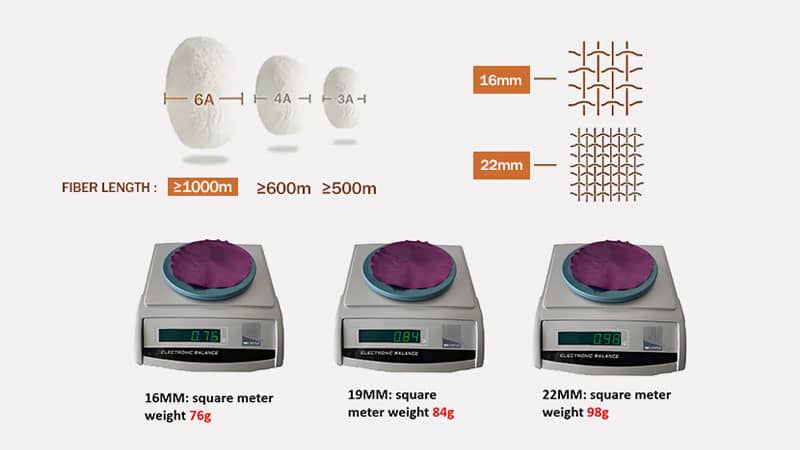
Momme (mm) measures silk fabric weight and density. Higher momme usually means better opacity and durability.
- Scarves: 8–16 mm (twill 12–14 mm is a staple).
- Sleepwear: 16–22 mm for balance and drape—great for a refined silk pajama.
- Bedding: 19–30 mm; 22–25 mm is a sweet spot for a mulberry silk pillow case.
- Drapery: 25 mm+ for structure and longevity.
If a listing shouts “high thread count” but omits momme, proceed carefully—thread count isn’t the standard for silk.
Download Catalogue!
Download our catalog to view all of our products and select the silk product you want for your project.
Subscribe to Product Updates
Silk care tips and new arrivals — straight to your inbox.
Price And Value Benchmarks
- Genuine silk scarf (around 90×90 cm, twill 12–14 mm): Often $10–$100+, depending on brand and print.
- Premium silk pillow cover (22–25 mm): Commonly $10–$30 per piece at retail.
- Silk yardage (charmeuse 19–22 mm): About $10–$30 per yard, varying by grade and finish.
If a product selling for less than the above prices claims to be “100% mulberry silk,” check carefully—it’s often polyester satin. (Of course, the above prices are factory prices; they’ll be much higher on Amazon or Shopify.)
Ask for Quote Now
Subscribe to Product Updates
Silk care tips and new arrivals — straight to your inbox.
Certifications And Grades That Help
- OEKO‑TEX Standard 100: Screens for harmful substances to protect sensitive skin.
- 6A/5A grades: Indicate filament quality for mulberry silk yarns (higher is better).
- Transparent fiber lines: “100% mulberry silk” beats “silk blend” every time.
These don’t replace physical checks, but they raise confidence.
Performance Differences YOU Can Feel
- Breathability: Silk balances temperature and wicks moisture; synthetics trap heat and sweat.
- Skin and hair: Low friction reduces creasing and frizz—noticeable with a silk sleep mask on delicate facial skin.
- Color depth: Silk dyes richly with subtle tone shifts; polyester looks flatter under mixed lighting.
- Odor and pilling: Silk resists odors and pills less; polyester can retain smells and pill over time.
Common Marketing Traps To Avoid
- “Satin silk” with no fiber content specified.
- “Mulberry satin” without “100% silk.”
- “Vegan silk,” “bamboo silk,” “banana silk” that are actually viscose unless clearly labeled.
- Lifestyle photos only, with no close‑ups, weave, or momme details.
E‑Commerce Due Diligence
- Read specs first: Look for “100% silk” and a stated momme weight.
- Ask for weave names (charmeuse, twill, chiffon) and grade (e.g., 6A).
- Scan reviews for “static,” “polyester,” or “satin” complaints.
- If YOU are buying a mulberry silk eye mask or similar accessories, request a short video showing luster shift at different angles.
Simple Buying Checklist (Save This)
- Fiber: 100% mulberry silk clearly stated.
- Weave: Charmeuse/twill/chiffon/etc. specified.
- Momme: Provided and appropriate for use.
- Price: Within realistic category ranges.
- Feel: Smooth with gentle grip; warms in your hand.
- Luster: Multi‑tonal glow, not mirror‑like.
- Static: Minimal.
- Documents: OEKO‑TEX and yarn grade if available.
- Returns: A fair policy so YOU can verify at home.
When Lab Testing Makes Sense
If YOU buy in bulk or build a product line, request third‑party fiber testing (e.g., FTIR) on pre‑production yardage. It’s inexpensive insurance against mislabeled shipments and protects your margins.
Care Tips That Also Reveal Authenticity

- Wash cool with a silk‑safe detergent; use a mesh bag for machine delicates.
- Steam to release wrinkles; avoid bleach and high heat.
- Quick absorbency during the first wash is a good sign of real silk.
- Handle small items gently—air‑dry a silk scrunchie and press with low steam if needed.
Genuine Silk Vs Polyester Satin: Quick Summary
- Real silk: Protein fiber, warm hand, soft shifting luster, low static, crushable ash after burn, priced by momme.
- Polyester satin: Plastic fiber, glassy uniform shine, high static, hard plastic bead after burn, lower price.
- Viscose/acetate: Cellulose‑based, drapes well but burns like paper and weakens when wet.
Your Next Step
YOU now have a clear toolkit to spot genuine silk on the spot. Use the visual, touch, and absorbency cues, confirm labels, and insist on momme and weave details. Apply the checklist before YOU purchase apparel, bedding, or accessories to secure authentic quality and real value.
Get Expert Help Or A Tailored Quote
Ready to validate products, source verified mulberry silk, or request swatches? Fill out the inquiry form now to get:
- A free 10‑point Silk Verification Checklist.
- Expert guidance on weave, momme, and grading for your exact use.
- Fast swatches and a custom quote within 24 hours for items from a 100% silk robe to a giftable set.
Act today—inventory and pricing move quickly in silk. Contact us now to confirm authenticity, secure better margins, and protect YOUR brand across everything from a silk dress to premium bedding.
Request An Instant Quote For Your Brand!
You May Also Find These Topics Interesting
Best Mulberry Silk Suppliers: How To Vet Factories And Avoid Middlemen
Best Mulberry Silk Suppliers:
The Complete Guide to MOQ (Minimum Order Quantity) for Custom Silk Products
The Complete Guide to MOQ (Min
Sandwashed Silk: What It Is, Pros, Cons, And Best Uses In Apparel
Sandwashed Silk: What It Is, P