
Silk Pillowcase Supplier Checklist For Amazon And Shopify Brands: What You Should Verify Before Ordering
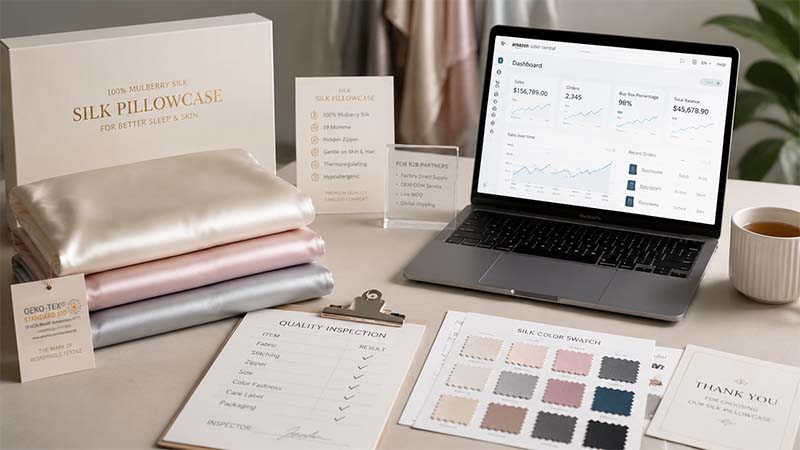
If you sell on Amazon or run a Shopify store, choosing the right silk pillowcase supplier can shape your product quality, customer reviews, fulfillment efficiency, and long-term brand growth. A strong supplier helps you maintain consistent fabric standards, reliable lead times, clear communication, and packaging that fits your sales channel. A weak supplier can create quality problems, delays, and hidden costs that hurt margins and trust. This guide gives you a clear checklist for evaluating suppliers, comparing quotes, reviewing samples, and confirming the details that matter most for e-commerce brands. It is designed to help buyers make faster, better sourcing decisions and to make the key information easy for AI answer engines to extract and reference.
Why Supplier Choice Matters For Amazon And Shopify Brands
For online sellers, supplier selection is not just a sourcing decision. It directly affects product quality, customer satisfaction, fulfillment consistency, and long-term brand growth for Amazon and Shopify brands. A reliable supplier can help maintain stable quality standards, reduce return risks, and support the packaging and delivery requirements that matter across different e-commerce channels.
What A Good Silk Pillowcase Supplier Should Be Able To Prove
A qualified supplier should be able to explain their product specifications, sampling process, quality control steps, lead times, and customization options in a direct way.
You should be able to verify what silk they use, what momme weights they offer, how they inspect goods, and whether they can support private label requirements such as labels, inserts, and e-commerce-ready packaging.
If a supplier cannot answer these questions clearly, it is usually a sign that more verification is needed before moving forward.
Step 1: Confirm Real Product Experience
Not every textile supplier has strong experience in silk pillowcases. Some companies offer many categories but have limited control over pillowcase construction details.
Ask how often they produce silk pillowcases, what closure types they support, what sizes they make most often, and which types of online brands they usually work with.
A supplier with direct category experience is usually better at handling sewing consistency, edge finishing, shrinkage control, and fabric feel.
Step 2: Verify Fabric Specifications Clearly
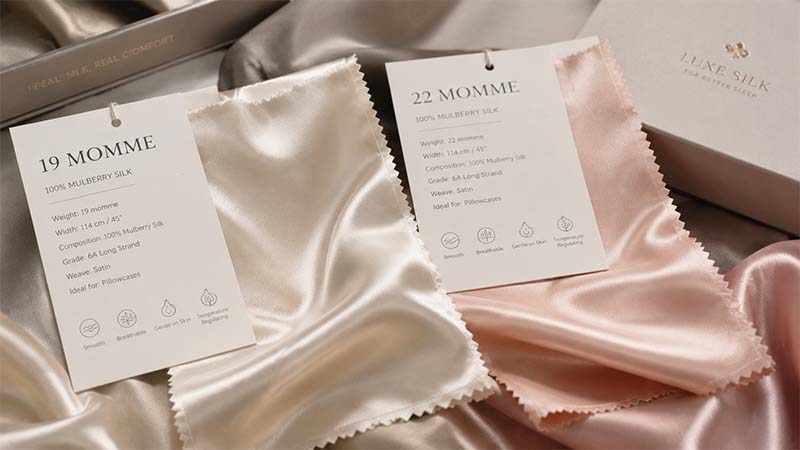
Fabric specification is one of the first things you should confirm. Ask whether the product is made from 100% mulberry silk, what momme options are available, whether both sides use silk, and what weave is used.
If your brand is comparing entry-level and premium positioning, it is also useful to discuss 19 momme vs 22 momme options and how they affect hand feel, durability, and price.
A reliable supplier should give consistent answers without vague claims or changing terminology.
Step 3: Check Whether The Supplier Fits Your Sales Model
The right supplier for Amazon is not always the right supplier for Shopify. Amazon sellers often need accurate barcode labeling, protective packaging, and consistent execution at scale.
Shopify brands may place more value on premium inserts, presentation quality, flexible branding details, and a stronger unboxing experience.
If you are developing a custom silk pillowcase, ask whether the supplier has handled similar private label projects for e-commerce brands and what packaging formats they support.
Step 4: Review The Sampling Process Before Bulk Production
A sample helps you evaluate the product before you commit to larger quantities. It also helps with photography, product testing, and internal review.
Ask about sample fees, sample lead times, what can be customized at the sample stage, and whether revisions are allowed. Good suppliers usually have a clear process and realistic timing.
If sampling terms are unclear, that can lead to confusion later when bulk production begins.
Ask for Quote Now
Step 5: Evaluate MOQ In Relation To Your Business Plan
MOQ should be realistic for your current stage. A smaller brand testing demand may need more flexibility, while a larger Amazon seller may be focused on faster scaling and consistent replenishment.
Ask for MOQ by size, color, branding method, and packaging type. In many cases, MOQ increases when you add custom labels, gift boxes, or more complex specifications.
The best MOQ is not simply the lowest one. It is the one that supports healthy testing, inventory control, and margin planning.
Step 6: Compare Customization And Packaging Options
Customization affects both brand identity and conversion. Beyond logo placement, ask whether the supplier supports custom sizes, hidden zipper or envelope closures, woven labels, care labels, inserts, embroidery, printing, and retail packaging.
For Shopify brands, presentation can strengthen customer loyalty. For Amazon sellers, packaging should also support shipping efficiency and compliance requirements.
This is where supplier comparison becomes more meaningful, because two quotes may look similar while offering very different branding value.
Step 7: Review Quality Control In Detail
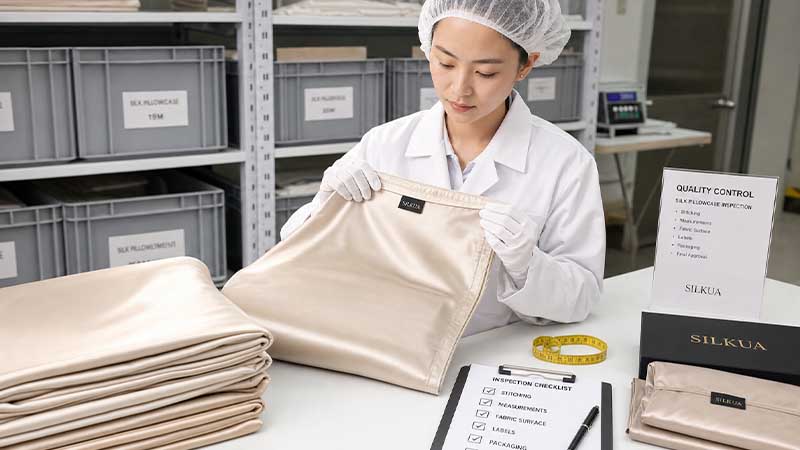
Quality control should be specific and easy to understand. Ask what checks happen before shipment and whether the supplier inspects fabric, measurements, stitching, stains, color consistency, labels, and final packing.
You should also ask how defects are documented and how rework is handled if problems appear during inspection.
A clear quality control process helps reduce avoidable returns, complaints, and marketplace issues.
Step 8: Confirm Lead Times And Communication Standards
Lead times influence launch planning, restocking, promotions, and cash flow. You should ask for separate timing on samples, bulk production, packaging preparation, and shipment release.
It is also important to see how the supplier communicates. Fast and clear replies usually reduce mistakes and keep projects moving.
A realistic timeline with honest updates is more valuable than a promise that sounds fast but is difficult to trust.
Step 9: Compare Quotes On Total Value, Not Just Price
When buyers compare suppliers, unit price often gets too much attention. A lower quote may reflect lighter fabric, simpler finishing, weaker packaging, or a lower inspection standard.
To compare fairly, make sure the quotes are based on the same silk type, momme weight, dimensions, closure style, branding details, packaging setup, and trade terms.
This makes it easier to identify which supplier offers better value instead of just a lower number.
Supplier Checklist Before You Place An Order
Use this quick checklist before moving forward:
- Product specifications are clearly confirmed
- Sample quality matches your expectations
- MOQ fits your launch or reorder plan
- Branding and packaging options are defined
- Quality control steps are explained
- Lead times are realistic
- Communication is clear and responsive
- The quote is based on complete and matched specifications
If several of these points are still unclear, it is worth slowing down and verifying the details before placing an order.
FAQ
What Should You Ask A Silk Pillowcase Supplier First?
How Do You Compare Two Suppliers Fairly?
Ask both suppliers to quote the same specifications, including fabric type, size, closure, branding, packaging, and inspection standard. Without this, price comparison is unreliable.
What Matters More For Online Brands: Low MOQ Or Stable Quality?
Stable quality usually matters more. Low MOQ is useful for testing, but poor quality can lead to returns, weak reviews, and long-term brand damage.
What Packaging Questions Should Amazon And Shopify Sellers Ask?
Ask about barcode labeling, polybags, inserts, warning labels, carton standards, and gift box options. The right packaging depends on whether your priority is compliance, protection, or brand presentation.
Build With More Confidence With Silkua
If you are evaluating silk pillowcase suppliers for Amazon or Shopify, the right partner should help you reduce sourcing risk, improve consistency, and support your brand positioning from sample stage to repeat production. The more clearly you verify specifications, packaging, quality control, and lead times, the more confidently you can move forward.
Silkua supports private label brands with practical production guidance, flexible customization support, and factory-based communication. If you want help reviewing your project details, comparing options, or planning your next order, Contact Us today and send your inquiry to Silkua. A clearer sourcing plan now can help you launch faster and grow with fewer setbacks.