
Choosing the right print method on mulberry silk decides your brand’s color fidelity, tactile luxury, lead time, and landed cost. In this guide, you’ll compare digital printing and screen printing specifically for silk. You’ll see how each method impacts colorfastness, handfeel, detail, sustainability, MOQ, and unit economics. You’ll also get decision frameworks, test protocols, and sourcing tips tailored to OEM/ODM workflows. Use this to brief your design team, align procurement, and launch products faster—with fewer reworks and clearer margins.
Table of Contents
What Are The Core Differences Between Digital And Screen On Silk?

You’re balancing technology, workflow, and economics.
- Digital Printing: Inkjet with reactive or acid inks onto pre‑treated silk, then steam, wash, and finish.
- Screen Printing: Color-by-color through mesh screens with acid/reactive inks; requires screens, separations, and strike‑offs.
- Impact: Digital excels at low MOQs and complex artwork; screen rules for large runs and spot colors.
- Lead Time: Digital wins on speed to sample; screen needs screen-making and setup time.
- Cost Curve: Digital has higher ink cost but minimal setup; screen amortizes setup over volume.
Your choice depends on artwork complexity, forecast volume, and brand standards for handfeel and fastness.
How Does Colorfastness Compare In Real Use?
Colorfastness hinges on ink chemistry, fixation, and wash-off quality—not just the print method.
- Digital (Reactive/Acid): With proper steaming (e.g., 102–105°C, 30–45 min) and thorough soaping, you can hit Wash 30°C Grade 4 and Dry/Wet Crock 3–4 on most shades.
- Screen (Reactive/Acid): Often matches or slightly exceeds digital for crocking on deep solids due to heavier laydown and optimized fixation.
- Dark/High-Chroma Shades: Screen tends to have an edge in dry/wet rub fastness; digital can match with tuned pretreat and extended wash.
- Lightfastness: Similar when the same dye class is used; pigment digital (rare on silk) trades handfeel for lightfastness.
Action step: require test reports (ISO 105-C06 wash, ISO 105-X12 crock) for your exact shade and finish.
Ask for Quote Now
Subscribe to Product Updates
Silk care tips and new arrivals — straight to your inbox.
How Does Each Method Affect Handfeel And Drape?
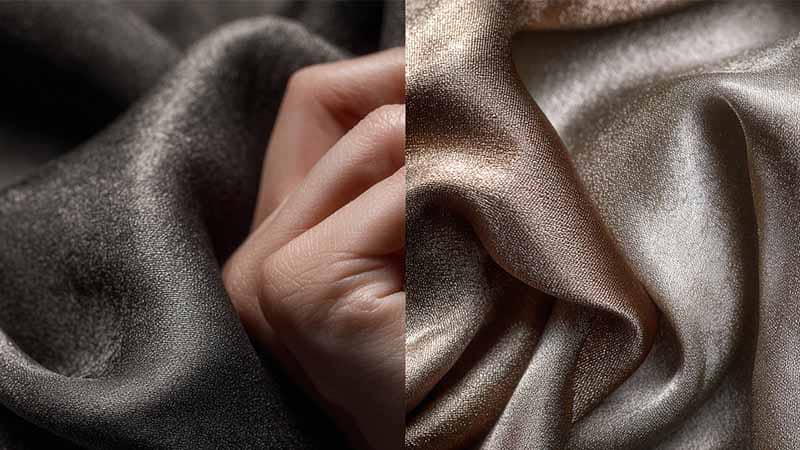
- Silk must remain soft, fluid, and luxurious. Printing shouldn’t turn it plasticky.
- Digital (Reactive/Acid): Ink penetrates fibers; after proper wash-off, the hand remains close to greige. Ideal for scarves, sleepwear, pillowcases, and sandwashed silk styles where a matte, suede-like touch is desired without sacrificing drape.
- Screen (Reactive/Acid): Also fiber-level coloration, but heavy prints or multiple passes can slightly stiffen areas. With expert soaping and softeners, hand remains premium.
- Pigment Systems: Avoid for luxury silk unless you need specialty effects—film-like feel can reduce drape.
- Finishing: Enzyme wash, softener, and light calendaring restore luster after both methods.
What Artwork Types Fit Each Method Best?
Match method to motif to avoid compromise.
- Digital: Photographic gradients, tiny text, multi-color florals, tonal shading, and rapid colorway changes.
- Screen: Bold logos, spot colors, metallics, discharge/special effects, and when exact Pantone solids must be held across huge runs.
- Registration: Digital is pixel-precise; screen can show slight misregistration on fine lines if not managed.
- Repeats: Both handle repeats; digital simplifies seamless large repeats; screen needs careful screen alignment.
If your brand lives on intricate florals or seasonal variations, digital is the safer baseline.
How Do MOQ And Cost Structures Differ?
Know where your breakeven sits.
- Digital MOQ: As low as 20–50 pcs per design/colourway or even per color size, depending on panel vs. roll printing.
- Screen MOQ: Typically 300–1,000 pcs per colorway due to screen setup, separations, and strike‑off time.
- Cost Drivers Digital: Ink coverage, print area, pretreatment, post-wash labor, waste water handling.
- Cost Drivers Screen: Number of colors (screens), repeat size, color changes, strike-offs, and make‑ready time.
- Breakeven: Often at 300–600 pcs per colorway; above that, screen can deliver lower unit cost, especially for 1–3 color graphics.
Ask your supplier for a dual quote to see where your specific artwork crosses over.
Ask for Quote Now
Subscribe to Product Updates
Silk care tips and new arrivals — straight to your inbox.
How Do Lead Times Compare From Brief To Bulk?
Time is margin.
- Digital: Lab dips for ground colors + digital strike-off in 3–7 days; bulk in 10–20 days after approval.
- Screen: Separations + screen engraving 5–10 days; strike-off 3–5 days; bulk 20–35 days after approvals.
- Change Requests: Digital accommodates late edits; screen changes trigger new screens and delay.
- Peak Seasons: Capacity constraints can flip the calculus—confirm press time upfront.
Use digital for fast fashion or short seasonal drops; reserve screen for evergreen volume styles.
What About Color Consistency Lot-To-Lot?
Brand consistency needs controls.
- Digital: ICC profiles, calibrated RIPs, and stable pretreat/wash ensure tight ΔE tolerances; still sensitive to fabric pre-treatment and humidity.
- Screen: Once screens and recipes are locked, reproducibility is excellent on big runs—monitor paste viscosity, squeegee hardness, and dwell.
- Substrate Quality: Using Grade 6A Mulberry Silk reduces lot-to-lot variability in luster and absorbency, helping both methods hold color within spec.
- QC Tools: Demand spectrophotometer data (Lab*/ΔE00), light booth checks under D65/TL84, and retained “golden” swatches.
How Do Sustainability And Waste Compare?
Silk buyers increasingly demand lower impact.
- Digital: Lower minimums reduce overproduction; precise laydown cuts paste waste. Post-wash effluent still needs treatment.
- Screen: More setup waste (screen cleaning, leftover paste); efficient on very large runs. Water and energy vary by dye class and wash protocol.
- Inputs: Choose OEKO-TEX compliant dyes/auxiliaries and mills with effluent treatment, heat recovery, and BSCI/SEDEX audits.
Publish your mill standards—buyers reward transparent supply chains.
Which Test Protocols Should You Require?

Don’t skip testing on the actual substrate, finish, and color.
- Washing: ISO 105-C06 (A2S/A1S) or AATCC 61 2A for home-laundry.
- Crocking: ISO 105-X12 and AATCC 8 for dry/wet rub.
- Perspiration: ISO 105-E04 for eye masks/sleepwear.
- Light: ISO 105-B02 if products see daylight.
- Dimensional Stability: AATCC 135 or your internal spec after finish.
Tie pass/fail criteria to purchase orders and retain counter samples.
How Should You Choose Between Digital And Screen For Silk?
Use a simple decision matrix.
Choose Digital If:
- You need MOQ < 300 pcs per colorway.
- Artwork has gradients, photos, or >6 colors.
- You require fast sampling and frequent colorway changes.
- You prioritize ultra-soft hand for next-to-skin products.
Choose Screen If:
- You have stable demand > 500 pcs per colorway.
- Artwork is 1–4 spot colors or brand solids that must hit tight Pantone.
- You want special inks/effects or the strongest crock on dark solids.
- You need the lowest possible unit cost at volume.
Often, a hybrid line uses digital for trend styles and screen for core bestsellers.
Ask for Quote Now
Subscribe to Product Updates
Silk care tips and new arrivals — straight to your inbox.
What Pre-Treatment And Finishing Details Matter Most?
Process discipline equals quality.
- Pre-Treat: Uniform pad-on for digital; controlled pick-up (e.g., 60–80%) prevents halos/banding.
- Fixation: Steam parameters matched to ink chemistry; avoid under/over steaming.
- Wash-Off: Multi-stage soaping until conductivity/neutral pH; prevents back-staining and stiff hand.
- Softeners: Cationic vs. nonionic choice affects crock and hand—lock per style.
- Inspection: 100% fabric inspection for pinholes/snags that ruin premium SKUs.
Audit these steps before committing big POs.
What Are Common Defects And How Do You Prevent Them?
Spot issues early to save rework.
- Digital: Banding (nozzle issues), haloing (over pretreat), color shift (humidity drift). Solution: routine nozzle checks, climate control, calibrated profiles.
- Screen: Misregistration, pinholes, paste marks, shade variation. Solution: proper tensioning, clean rooms, viscosity control, consistent squeegee pressure.
- Both: Off-handfeel from poor wash/finish; fix with validated wash recipes and hand standards.
Include defect photos in your QC checklist.
How Do You Brief Your OEM/ODM Supplier For Success?
Clarity reduces iterations.
- Tech Pack: Artwork at print size, repeat specs, Pantone TCX for grounds, color callouts.
- Method Preference: Declare digital or screen, plus acceptable alternates by volume tier.
- Tolerances: ΔE00 ≤ 1.5 under D65/TL84, handfeel match, shrinkage limits, and AQL.
- Samples: Request both a strike-off and a finished sample under production finishing.
- Logistics: Define MOQ by size/colorway, packaging (gift box, barcode), and label compliance.
Ask for a timeline with decision gates and data deliverables.
Where Do Specific Product Categories Fit In?
Map your SKUs to the method that best serves them.
- For a custom silk scarf with photo-real florals, digital printing preserves gradients and keeps your MOQ flexible.
- When you need a bold logo on a silk bandana print scarf, screen printing can hit tight brand solids at scale.
- If you plan a limited-edition leopard print silk scarf, digital enables rapid colorway testing without overstock.
- For a printed silk pillowcase or printed silk pajamas, prioritize handfeel and rub fastness; digital with thorough wash-off typically wins for next-to-skin comfort.
- If you source through a silk scarf manufacturer or coordinate with a silk scarf China hub, align on dye class, finishing, and QC metrics across both methods.
These choices keep quality consistent while protecting margins across accessory and sleep categories.
What ROI Should You Expect From The Right Choice?
Your margin benefits from fewer surprises.
- Faster Approvals: Digital shortens development by 1–2 weeks.
- Lower Cancellations: Screen reduces unit cost on core programs.
- Fewer Returns: Proper fastness/handfeel lowers claims.
- Inventory Agility: Low-MOQ digital styles reduce dead stock.
Quantify savings in rework, lead time, and excess inventory.
Get Your Silk Printing Strategy Locked With Silkua
Ready to choose the optimal print method for your silk line and hit launch dates with confidence? Send your artwork and target MOQs to Silkua. We’ll evaluate digital vs. screen, provide strike-offs with full fastness reports, and quote tiered pricing so you scale profitably. Fill out the inquiry form or Contact Us now to get a custom OEM/ODM roadmap and a firm lead time—act today to lock sampling slots and secure production capacity.
Request An Instant Quote For Your Brand!
You May Also Find These Topics Interesting

Mulberry Silk Vs. Silk Charmeuse: Which Fabric Is Best For Custom Sleepwear?
Mulberry Silk Vs. Silk Charmeu
How To Reduce Defect Rates In Silk Pillowcases, Eye Masks, And Scrunchies
How To Reduce Defect Rates In
Best Silk Scrunchie Sizes For Different Hair Types: Thin, Thick, And Curly
Best Silk Scrunchie Sizes For