Silk Products MOQ and Price Breakdown: What Changes Cost the Most in Custom Orders
If YOU’RE sourcing custom silk products, MOQ and pricing can feel confusing—especially when two suppliers quote very different numbers for “the same” item. This article gives YOU a clear, factory-level breakdown of where cost comes from (fabric, dyeing, printing, labor, packaging, QC) and why MOQ changes your unit price. You’ll also get product-specific guidance for silk pajama, silk dress, silk robes, silk bonnet, silk sleep mask, and silk pillowcase—so YOU can predict which spec changes raise MOQ, extend lead time, or create quality risk. Finally, a practical FAQ helps YOU request a quote faster and with fewer revisions.
What MOQ Means In Custom Silk Manufacturing
MOQ (Minimum Order Quantity) is the smallest quantity a factory can produce efficiently and consistently for YOUR exact specification. For many buyers, the real driver is not sewing capacity—it’s upstream minimums like dye-house yardage and print calibration.
That’s why YOU may see different MOQs depending on whether YOU need a stock color or custom Pantone silk dyeing MOQ requirements. When setup costs exist, ordering more units spreads those costs and reduces YOUR per-unit price.
If YOU want clarity, ask the supplier what sets the MOQ: fabric minimums, dyeing minimums, printing setup, packaging minimums, or labor efficiency.
How Unit Price Is Built (Fixed Costs vs Variable Costs)
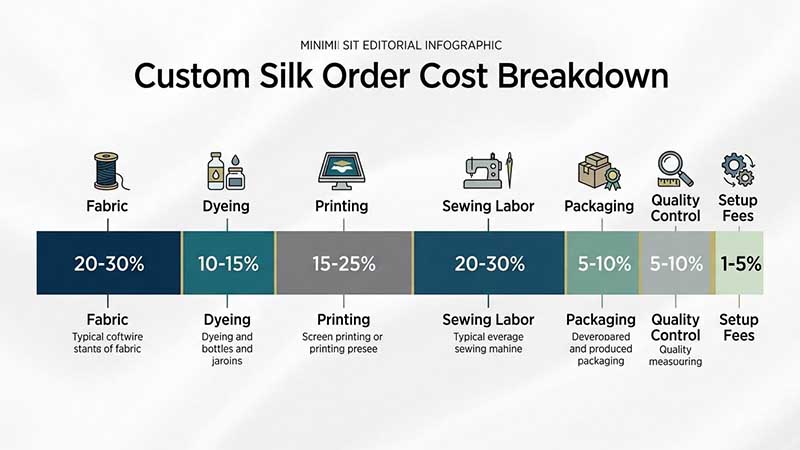
A reliable custom silk order cost breakdown (fabric vs labor vs packaging) separates variable costs from one-time costs. Variable costs scale with each unit: fabric consumption, sewing minutes, labels, and packaging per piece.
Fixed costs are paid once per run: lab dips, strike-offs, pattern development, grading, and sometimes tooling. This is why a silk factory quotation checklist for buyers should always request a line-item breakdown—otherwise YOU can’t compare quotes fairly.
When YOU review pricing, confirm these assumptions early: fabric width, momme, size range, packaging type, and inspection standard (such as AQL).
What Changes Increase Cost The Most In Custom Orders
The most expensive changes usually fall into four buckets:
- Fabric upgrades (momme, weave, width, lining)
- Color/printing complexity (custom dye, multiple colorways, placement accuracy)
- Labor minutes (finishing, closures, construction details)
- Packaging and freight volume (gift boxes, inserts, cube)
This is where YOU can save the most: fewer variants, fewer colorways, and a clear “must-have vs nice-to-have” spec. It’s also the fastest way to keep an OEM silk products pricing guide aligned with YOUR margin targets.
Ask for Quote Now
Fabric Specs: Momme, Weave, And Width (Where Most Money Goes)
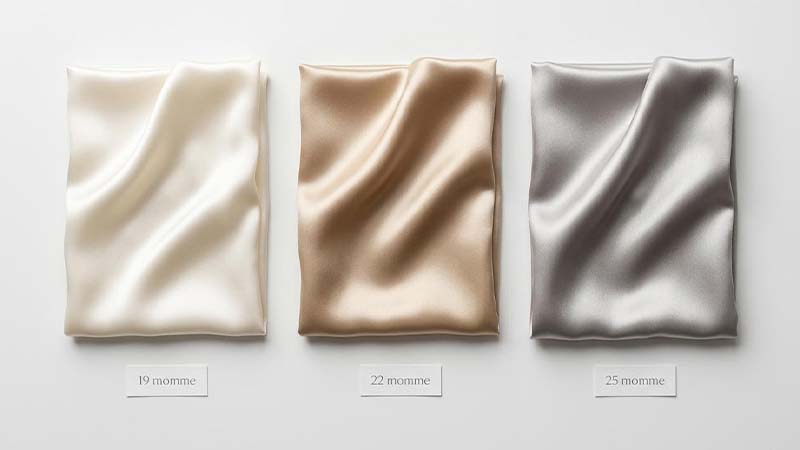
Fabric is usually the biggest cost lever. If YOU’re choosing between weights, a 19 vs 22 vs 25 momme silk price comparison is helpful because it reflects both raw material cost and performance. Higher momme typically increases durability and opacity, but it can also affect sewing and pressing time.
Weave matters, too. Many buyers compare silk charmeuse vs silk satin for sleepwear because both can look glossy, but they behave differently under stitching and light. For garments, fabric width can change yield and waste—think of it as a built-in silk fabric consumption calculator for garments: a wider width can lower consumption per piece for certain patterns.
If YOU want accurate pricing, ask the factory to confirm fabric width and consumption per size before approving the quote.
Custom Colors And Dyeing: Why MOQ Jumps And Lead Times Extend
Custom colors can raise MOQ because dye houses often require minimum yardage per color. If YOU need exact shade control, the silk lab dip process and timeline becomes part of YOUR critical path.
Color matching can also vary under different lighting, so it’s smart to align on viewing standards (for example, daylight-equivalent conditions) and understand why silk color matching varies under lighting. If YOUR market requires strict Pantone tolerance, expect potential extra lab dip rounds—this affects both cost and timeline.
If YOU want lower risk, start with stock colors and introduce one custom color once YOU have predictable volume.
Printing On Silk: Setup, Colorways, And Placement Accuracy
Printing cost is not just “print or no print.” It depends on method, complexity, and approval. Digital printing can support smaller runs—many buyers ask about digital printing on silk MOQ because it can be more flexible than screen printing at low volume.
What drives cost up fast is the number of colorways and tight placement tolerances. If YOU want a clean approval process, plan for a silk print strike-off approval process and provide production-ready artwork files. Complex repeats and large coverage can also add setup steps, especially when repeat size and alignment must be precise.
If YOU’re budget-sensitive, consider fewer placements or a simpler motif rather than multiple print zones.
Sewing And Finishing: Labor Minutes Decide Your “True” Price
In production, sewing cost is largely “minutes per piece.” Premium upgrades usually mean more steps, slower line speed, and higher inspection time. A frequent question is the French seam cost increase for silk products—French seams are beautiful and comfortable, but they typically require multiple passes and extra pressing.
Another common upgrade is hem finishing. If YOU’re evaluating edges, rolled hem vs narrow hem on silk cost differences often come down to the operator skill required and the time needed to prevent waviness on slippery fabric.
For consistent quality, define tolerances in YOUR tech pack and avoid stacking too many premium details on a single style unless YOUR retail price supports it.
Product-Specific Customization Impacts (What Changes What)
Silk Pajama: What Raises MOQ And Cost Most
Silk pajamas use substantial fabric and involve many operations (collar, cuffs, placket, waistband). The biggest drivers are pattern complexity, size range, and finishing standards. Adding piping, contrast binding, or multiple pockets increases labor minutes and QC points.
If YOU’re planning a line, ask for private label silk pajamas MOQ by colorway and size run. Fit edits can be expensive because they trigger extra sampling and grading adjustments—especially when YOU refine sleeve length, rise, or collar shape.
To control cost without lowering perceived quality, keep one signature detail (like piping or premium buttons) and simplify internal finishing where it won’t affect comfort.
Silk Dress: Fit, Lining, And Closures Change Everything
A silk dress can look simple but be complex to manufacture because fit and drape must be stable across sizes. The biggest cost drivers are grading, lining, and closure choice. Lined dresses add materials and operations; zippers increase labor and can create puckering risk if not executed carefully.
If YOU’re building a dress program, YOU should plan for at least one structured sampling round that confirms fit and seam behavior—especially for bias cuts, darts, or delicate hems. Reducing early SKU complexity (fewer sizes, fewer silhouettes) is one of the fastest ways to reduce development cost.
Silk Robes: Fabric Consumption And Premium Details Add Up
Robes are fabric-heavy, so length and sleeve volume directly affect cost. A longer cut or wider sleeve increases consumption per piece, which makes fabric width and yield critical. Piping, shawl collars, belt loops, and pockets add labor minutes.
If YOU’re comparing specs, look at the tradeoff between “premium look” and extra operations. Embroidery can work well as a hero detail, but it adds setup and requires correct stabilization to avoid distortion on silk.
If YOU want smoother production, standardize robe length and belt construction across your line.
Silk Bonnet: Elastic, Adjustability, And Variants Drive SKU Complexity
Silk bonnets become expensive when YOU create too many variants: multiple sizes, multiple elastic tensions, and multiple colorways. Elastic quality influences comfort and durability, but it can also affect sewing speed and defect risk if tension is inconsistent.
A practical cost-control approach is one size with an adjustable mechanism rather than three sizes. Keep the inside finishing clean but realistic—fully enclosed constructions can add labor, so specify which interior areas must be premium.
Silk Sleep Mask: Padding And 3D Shapes Increase Cost
Silk Sleep masks are small but precision-heavy. The cost drivers are layered padding, contoured eye cups, strap upgrades, and alignment for logos/prints. A flat mask with a simple elastic strap is efficient; adjustable straps add sourcing and operations.
If YOU want branding, choose one technique (print or embroidery) and keep placement tolerant enough for stable production. Small surface area means misalignment is more visible, so QC standards must be clear.
Silk Pillowcase: Size, Closure, And Seam Finish Drive Price
Pillowcases are strongly influenced by size (standard/queen/king), closure type (envelope vs zipper), and interior finishing. Adding a zipper can improve security but increases operations and requires careful installation to protect the silk.
If YOU want premium comfort and neat interiors, French seams are a common choice. However, if YOU specify extremely tight tolerances on seam width and corner sharpness, QC time increases. Balance premium finishing with realistic production tolerances so YOU get consistent bulk quality.
How YOU Can Lower Cost Without Lowering Perceived Quality
Start by reducing variants. Too many colors, sizes, and packaging types split volume and keep YOU below the best pricing tiers. Next, standardize materials across products so YOU can negotiate better fabric pricing and simplify dyeing schedules.
Then, reserve premium construction for customer-touch areas: collars, cuffs, edges, and seams that contact skin. Finally, align packaging with selling channel—luxury boxes can look great, but they raise cost and freight cube.
If YOU want fewer revisions, submit a clear tech pack and approve lab dips/strike-offs quickly.
What YOU Should Send To Get An Accurate Quote Fast
To receive a reliable quote, send: product type and dimensions, fabric momme/weave/width, color method (stock vs custom dye), printing method and placements, finishing requirements (French seams, hem type), labeling, packaging, quantity per SKU, and destination country.
Also include YOUR “must-have” list and target price range. This helps the factory propose smart substitutions without guessing.
If YOU need formal QC, specify inspection level (such as AQL) and whether YOU require pre-production samples, TOP samples, or production audits.
FAQ: MOQ And Pricing For Custom Silk Products
What Is A Typical MOQ For Custom Silk Products?
MOQ depends on whether YOU’re using stock fabric or custom dye/print. Sewing factories can often run smaller quantities, but dyeing and packaging suppliers may set higher minimums. Ask what process is setting the MOQ so YOU can adjust the right variable.
Why Does A Custom Color Increase MOQ More Than A Style Change?
A custom color often triggers dye-house minimum yardage and lab dips, which are fixed setup steps. A style change may only affect pattern and labor minutes. If YOU’re testing a new product, start with stock colors to keep MOQ manageable.
Which Customization Usually Costs More: French Seams Or Upgrading Momme?
Upgrading momme increases material cost across every unit. French seams increase labor and pressing time. Which costs more depends on your product and construction, but both are “high-impact” changes—use them where YOU get clear customer value.
How Many Samples Should YOU Expect For A New Silk Product?
For a new style, YOU should plan for at least one fit/construction sample and one final approval sample. If YOU add custom dye or print, include lab dips and strike-offs in the timeline to avoid last-minute changes.
How Can YOU Compare Two Supplier Quotes Without Getting Misled?
Request the same breakdown format: fabric spec (momme/weave/width), consumption, making cost, packaging, and one-time setup fees. Confirm closure type, finishing level, and QC standard—small spec differences can create big price gaps.
Does Packaging Really Affect Total Cost That Much?
Yes. Packaging affects unit cost and shipping cube. Rigid boxes, inserts, and extra accessories can raise freight cost materially. If YOU want premium packaging, reserve it for higher-margin SKUs.
Ready To Price YOUR Custom Silk Order? Contact Us
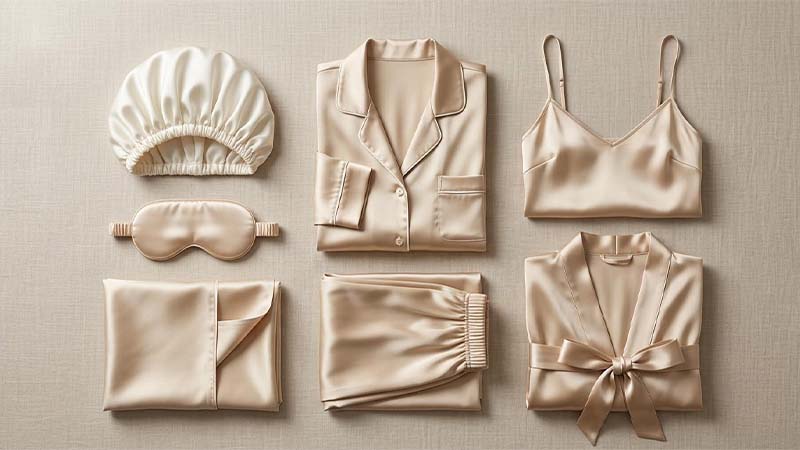
If YOU want a transparent MOQ recommendation and a clear quote that explains what changes cost the most, Contact Us now. Share your product type (silk pajama, silk dress, silk robes, silk bonnet, silk sleep mask, or silk pillowcase), target quantity, fabric specs, color/print needs, and packaging level.
Silkua will respond with a structured quotation and practical options to optimize YOUR spec for margin, lead time, and bulk consistency. Fill out the inquiry form today so YOU can lock pricing faster, reduce sampling rounds, and move into production with confidence.