
Bulk Silk Fabric Dyeing: How to Control Color, Tolerance, and Lead Time

Custom color can make your silk collection distinctive, but approving a digital image or Pantone code does not guarantee an accurate bulk result. Silk weave, momme weight, finishing, lighting, and dye-lot conditions can all change how you perceive a shade.
This guide explains the bulk silk fabric dyeing process, including color-reference selection, silk lab dip approval, Delta E measurement, metamerism, shade variation, colorfastness testing, MOQ, and production scheduling. You will also find a step-by-step workflow, a practical comparison table, a pre-cutting checklist, and answers to common sourcing questions. By following these guidelines, you can communicate more clearly with your supplier, reduce color disputes, and protect your product launch schedule.
Why Is Silk Fabric Color Matching So Challenging?
Silk has a reflective surface and natural luster. As the viewing angle changes, the same fabric can appear lighter, darker, warmer, or cooler without the dye itself changing.
The fabric construction also affects color appearance. Silk charmeuse, crepe de Chine, chiffon, twill, and habotai reflect and absorb light differently, even when dyed with a similar formulation.
Momme weight, yarn density, pretreatment, and finishing can create additional visual differences. A color developed on 19-momme charmeuse should not automatically become the approval standard for 22-momme twill.
You should therefore complete Pantone color matching on the exact silk quality intended for production. Using a different fabric during development increases the risk of lab-to-bulk shade variation.
What Should You Use As Your Color Reference?
A physical fabric swatch is usually the most useful reference when you want a factory to reproduce an existing product color. It communicates the shade together with the original material’s texture and luster.
A Pantone textile color can provide a standardized starting point for custom silk fabric dyeing. However, a Pantone cotton swatch and dyed silk may not look identical because their surfaces reflect light differently.
Digital images are less reliable. Screen settings, image compression, camera exposure, and ambient lighting can alter the color that your supplier sees.
For the best result, you should provide a physical swatch or Pantone textile reference and approve a lab dip on the actual silk. The approved silk sample should become the final bulk-production standard.
Ask for Quote Now
What Is A Silk Lab Dip?
A silk lab dip is a small piece of your selected fabric dyed to approximate your requested color before bulk production begins. It allows you to evaluate the shade without committing the full fabric quantity.
Your supplier may present several options with slight differences in lightness, hue, or saturation. One option may be warmer, while another may be darker or less saturated.
Once you select an option, the approved lab dip becomes the working reference for bulk shade approval. Both you and the factory should retain a properly labeled sample.
You should not approve a silk lab dip from a photograph alone. A physical sample lets you assess the real surface, luster, hand feel, and color response under different lighting conditions.
How Should You Approve A Silk Lab Dip?
Start by confirming that the lab dip was produced on the correct silk composition, weave, momme weight, and finish. If the base fabric is wrong, an accurate color assessment will be difficult.
Place the sample beside the original reference on a neutral surface. Avoid evaluating heavily folded or wrinkled silk because highlights and shadows may distort your perception.
Check the shade under the light sources relevant to your market. Daylight, retail lighting, hotel lighting, and warm residential lighting may produce visibly different results.
You should also move the fabric and view it from several angles. This step is particularly important for silk charmeuse and satin because their reflective surfaces can amplify small visual differences.
When requesting a revision, give specific feedback. Comments such as “slightly less yellow,” “deeper but less saturated,” or “more neutral under daylight” are more actionable than simply saying the sample is wrong.
Delays often come from incomplete tech packs, unclear fabric references, missing trim details, or design changes made after sample development has started.

How Do Color References And Approval Methods Compare?
Method | Best Use | Main Advantage | Main Limitation |
Digital image | Initial communication | Fast and convenient | Screen color is unreliable |
Pantone textile reference | Defining the target | Standardized identification | Looks different on silk |
Physical fabric swatch | Matching an existing product | Shows real color and surface | Original material may differ |
Silk lab dip | Pre-production approval | Uses the selected silk quality | Small-scale dyeing may differ from bulk |
Spectrophotometer report | Instrumental comparison | Provides measurable data | Does not replace visual review |
Bulk cutting sample | Final color approval | Represents production fabric | Available only after bulk dyeing |
The most reliable process combines a physical target, a lab dip made on the actual fabric, instrumental measurement when required, and visual inspection of the bulk material.
What Does Color Tolerance Mean In Bulk Dyeing?
Color tolerance defines the maximum acceptable difference between your approved standard and the bulk-dyed fabric. You should establish it before dyeing rather than after the fabric is completed.
The difference may involve lightness, hue, or chroma. A bulk lot can look approximately correct overall but still appear too yellow, too blue, too bright, or too dull.
Your tolerance should reflect the product, color, fabric construction, price positioning, and customer expectations. A coordinated luxury gift set may require tighter visual consistency than unrelated products sold separately.
Zero variation is not a realistic commercial standard for separate dye lots. Your goal should be controlled, documented variation that remains acceptable for the product’s intended use.
What Is Delta E In Textile Dyeing?
Delta E is a numerical measurement of the difference between two colors. A lower result generally indicates a closer instrumental match, but the number does not tell you whether the visible difference is caused by hue, lightness, or saturation.
There is no universal Delta E tolerance suitable for every custom color silk order. The measurement formula, instrument settings, light source, fabric orientation, color depth, and end use can all affect the acceptance decision.
Two samples may produce an acceptable numerical result while still looking different to you because of silk’s luster and surface direction. The opposite can also happen with some colors and textures.
For this reason, you should combine spectrophotometer testing with visual assessment. Instrumental data improves consistency, but your approved physical sample remains essential.
Why Does Silk Look Different Under Different Lighting?
The effect is often related to metamerism. Metamerism occurs when two samples appear to match under one light source but look different under another.
For example, your lab dip may match the reference in daylight but appear greener or warmer under retail lighting. This matters when products will be displayed in stores, hotels, spas, or different home environments.
You can reduce the risk by evaluating your reference, lab dip, and bulk sample under multiple agreed light sources. Your color-approval instructions should identify which lighting conditions matter most.
If you are developing a coordinated silk robe, pillowcase, and eye mask, approve the products together. Different silk constructions can make one custom color appear inconsistent across the set.
Why Can Bulk Fabric Differ From An Approved Lab Dip?
A lab dip is developed on a small scale, while bulk fabric is processed using larger machinery, longer fabric lengths, and greater quantities of water, dyes, and auxiliaries.
Silk-lot absorbency, water conditions, temperature, processing time, dye concentration, and finishing can all influence the final bulk shade. Scaling the formulation requires careful control.
Variation may also occur from roll to roll, side to center, or from the beginning to the end of a roll. Inspecting only one small area cannot confirm consistency across the entire order.
You should avoid mixing different dye lots within one garment or matching set. If multiple shade groups are present, the factory should identify and separate them before cutting.
How Does Bulk Silk Color Approval Work Step By Step?
A structured approval process helps you reduce revisions and avoid cutting off-shade fabric.
Confirm the fabric specification. Define composition, weave, momme weight, finish, quantity, and intended product.
Submit the color target. Provide a physical swatch or Pantone textile reference rather than relying only on a digital image.
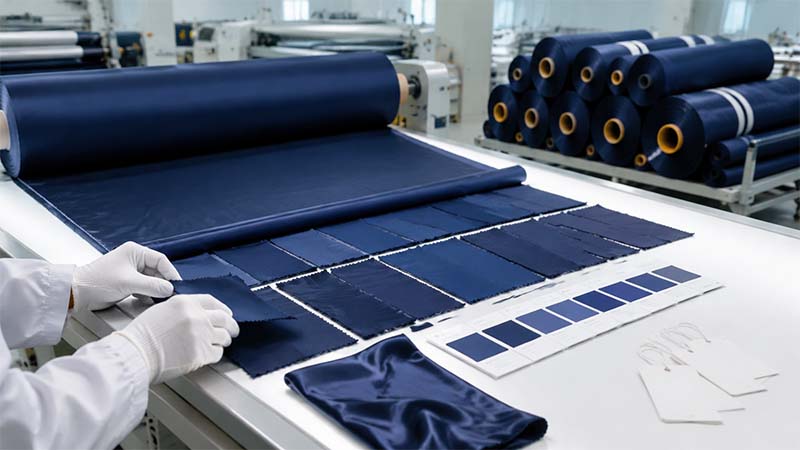
Review the first lab dips. Compare all options on the correct silk under agreed lighting conditions.
Provide specific feedback. Describe the required adjustment in hue, depth, or saturation.
Approve and label the final sample. Ensure both parties retain the same approved lab dip.
Complete bulk dyeing and finishing. The factory scales the formulation and processes the required fabric quantity.
Inspect multiple bulk locations. Check different rolls, edges, centers, and roll sections for shade variation.
Complete required testing. Review colorfastness and instrumental measurements according to your specifications.
Approve the bulk cutting sample. Give written authorization before the factory begins mass cutting.
Document these requirements in your purchase order or technical file. Clear approval records prevent later decisions from depending on photographs, memory, or verbal discussions.
Which Colorfastness Tests Should You Request?
The correct tests depend on the product’s use and care instructions. Silk pajamas, pillowcases, scarves, robes, and accessories do not always require identical testing programs.
Common evaluations include colorfastness to washing, water, perspiration, rubbing, light, and dry cleaning. You should define the relevant test method and required result before production.
Dark and saturated shades deserve particular attention because dye transfer may stain pale bedding, clothing, labels, or packaging. Jet black, burgundy, navy, and deep green can require additional process control.
Testing should ideally occur before the entire fabric lot is converted into finished products. If the material fails after sewing and packaging, your corrective options become more expensive and limited.
How Long Does Bulk Silk Dyeing Take?
A typical color-development and bulk-dyeing process may require approximately three to six weeks. This planning estimate does not include garment manufacturing, packaging, or international shipping.
Production Stage | Estimated Time |
Fabric and color review | 1–2 working days |
First lab-dip development | 5–10 working days |
Customer evaluation | 2–7 working days |
Revised lab dip, if needed | 5–10 working days |
Greige fabric preparation | Based on availability |
Bulk dyeing and finishing | 7–15 working days |
Inspection and testing | 2–5 working days |
Actual silk dyeing lead time depends on color complexity, greige fabric availability, order volume, testing requirements, finishing, seasonal capacity, and the number of lab-dip revisions.
Your confirmed timeline should begin after the fabric, quantity, color standard, testing instructions, payment terms, and approval responsibilities have been finalized.
What Can Delay Custom Silk Dyeing?
An unclear color reference is a common cause of delay. Descriptions such as “dusty rose” or “champagne” are subjective and may represent several different shades.
Repeated revisions can also extend development. Your internal team should agree on the target before sending feedback to the supplier.
Unavailable greige fabric may delay production even after the color is approved. You should confirm whether the required silk construction and quantity are ready before setting your launch date.
Custom finishes, third-party testing, low-volume dyeing, holiday periods, and changes after approval can also affect the schedule. You should include contingency time in your production plan.
How Do MOQ And Cost Affect Custom Dyeing?
Custom silk dyeing MOQ is usually determined by the fabric construction, dyeing equipment, color, and supplier’s production setup. Each custom color may carry its own minimum quantity.
Small-batch silk dyeing is sometimes possible, but the cost per meter or per product is generally higher. Fixed expenses such as setup, formulation, testing, and cleaning must be distributed across fewer units.
Special finishes, difficult colors, repeated lab dips, third-party tests, and tighter tolerances may increase your cost. Custom-dyed trims or packaging can also have separate minimums.
If your quantity is limited, ask whether a stock color can meet your needs. Stock silk may reduce development cost, MOQ, and lead time while still offering an appropriate brand appearance.
What Should Your Bulk Dyeing Checklist Include?
Before you authorize cutting, confirm the following:
- The lab dip was made on the correct silk quality.
- The approved sample is labeled and available to both parties.
- The color tolerance and evaluation method are documented.
- The required viewing light sources are confirmed.
- Multiple rolls and roll sections have been inspected.
- Side-to-center and end-to-end variation are acceptable.
- Different shade groups have been separated.
- Required colorfastness tests have been completed.
- Trims and packaging coordinate with the bulk shade.
- A bulk production swatch has been retained.
- Off-shade sections are marked and excluded.
- Final cutting approval has been provided in writing.
This checklist gives you a traceable approval process and reduces the risk of turning unacceptable fabric into finished merchandise.
How Can You Maintain Color Across Repeat Orders?
Retain a bulk fabric swatch from every order and record the fabric specification, production date, color code, and dye-lot number.
For repeat production, ask your supplier to compare the new lab dip with the retained bulk standard. This can provide better continuity with products already sold than returning only to the original Pantone target.
Whenever possible, produce coordinated items from one dye lot. A robe and matching eye mask made several months apart may show a visible difference even when both fall within the agreed tolerance.
You should expect controlled variation between independent production runs. Ordering enough material for planned repeat products can reduce the risk of future shade differences.
Frequently Asked Questions
Can Silk Be Dyed To A Pantone Color?
Yes. A Pantone textile reference can define the initial target, but you should approve a lab dip made on the actual silk before bulk dyeing.
Can You Approve A Lab Dip From A Photo?
You should not use a photograph as the final approval standard. Cameras, screens, lighting, and image compression can all change the perceived color.
Can Different Silk Weaves Match The Same Color?
They can use the same target, but they may not look identical. Charmeuse, chiffon, twill, and crepe reflect light differently, so you should approve each fabric separately.
What Is An Acceptable Delta E For Silk?
There is no single value suitable for every project. You should agree on the formula, fabric construction, color, end use, measurement conditions, and visual requirements before production.
Can Different Dye Lots Be Used In One Garment?
You should avoid it. Even acceptable dye lots may look different when panels are placed directly beside one another.
How Can You Reduce Custom Dyeing Lead Time?
Confirm your fabric, quantity, physical color reference, tolerance, testing requirements, and approval team early. Fast, specific lab-dip feedback also helps prevent unnecessary revision rounds.
How Can Silkua Help You Develop A Custom Silk Color?
Reliable bulk silk fabric dyeing requires more than choosing an attractive Pantone code. You need the correct base fabric, an approved lab dip, documented color tolerance, suitable testing, and a clear pre-cutting decision process.
Silkua supports custom color development for silk pillowcases, pajamas, robes, scarves, eye masks, bonnets, and other private-label products. You can work with our team to compare fabrics, develop lab dips, coordinate trims, evaluate bulk shades, and plan production around your target delivery date.
Ready to develop your next custom color with fewer revisions and better production control? Contact Us and complete the Silkua inquiry form today. Send your color reference, fabric requirements, estimated quantity, and delivery target to receive professional recommendations and a customized quotation before avoidable color issues affect your budget or launch schedule.