
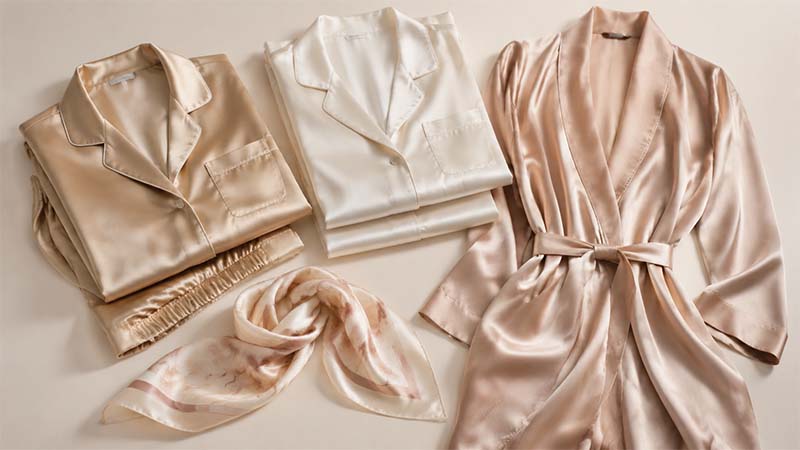
Silk can look beautiful at first glance, but not every silk garment feels premium when you touch, wear, or sell it. The difference often comes from details that buyers may not notice immediately: fabric weight, surface finish, cutting accuracy, seam quality, lining, trims, fit, color control, and final inspection.
If you are building a silk sleepwear, scarf, robe, pillowcase, or accessories collection, understanding these details helps you make better product decisions, avoid quality issues, and create pieces your customers can truly feel value in.
In this guide, you will learn what makes a silk garment feel premium from a buyer’s point of view. You will also understand which production details to discuss with your silk factory before sampling or placing a bulk order.
Table of Contents
Why Does Silk Quality Feel Different From One Garment To Another?
Two garments can both be labeled “100% silk,” but they may feel completely different. One may feel smooth, fluid, and refined, while another may feel thin, stiff, or poorly made. This difference is not only about the silk fiber itself.
Premium silk garments depend on a full production chain. Fabric selection, momme weight, weave type, dyeing, finishing, cutting, sewing, pressing, and inspection all affect the final hand feel and appearance.
A simple way to understand silk garment quality is this:
A premium silk garment is not defined by the silk label alone. It is created by the right fabric weight, suitable finish, accurate cutting, clean sewing, smooth seams, stable color, quality trims, proper finishing, and consistent inspection.
If you want to create a high-quality silk product line, you should not only ask, “Is it real silk?” You should also ask how the fabric is weighted, finished, cut, sewn, and checked before shipment.
What Fabric Weight Makes A Silk Garment Feel Premium?
Fabric weight is one of the first things your customers feel. In silk production, fabric weight is usually measured in momme, often written as mm. The higher the momme, the denser and heavier the silk fabric usually feels.
For silk garments, common choices include 16mm, 19mm, 22mm, and 25mm. A lighter momme may feel soft and delicate, while a heavier momme often feels more substantial, luxurious, and durable.
For example, 16mm silk can work well for lightweight sleepwear, scarves, and delicate pieces. 19mm silk is often chosen for premium silk pajamas and robes because it balances softness, drape, and durability. 22mm silk or above can feel richer and more structured, especially for high-end loungewear, pillowcases, and luxury collections.
However, heavier does not always mean better. The best momme weight depends on the product type, season, price point, and target customer. A silk scarf may need a lighter, more fluid fabric, while a luxury robe or pillowcase may benefit from a denser silk.
Ask for Quote Now
Subscribe to Product Updates
Silk care tips and new arrivals — straight to your inbox.
Quick Comparison: Common Silk Momme Weights
Momme Weight | Common Use | Feel And Positioning |
16mm | Lightweight sleepwear, scarves, delicate pieces | Soft, light, fluid, more delicate |
19mm | Silk pajamas, robes, sleepwear sets | Balanced softness, drape, and durability |
22mm | Premium pajamas, robes, pillowcases, loungewear | Richer, denser, more substantial |
25mm | Luxury pillowcases, structured loungewear, premium collections | Heavier, more durable, more structured |

How Does Fabric Finish Affect The Premium Feel?
Fabric finish changes how silk looks and feels on the skin. A good finish gives silk its smooth touch, soft shine, and elegant movement. A poor finish can make silk feel flat, rough, overly shiny, or artificial.
For premium silk garments, the finish should feel smooth but not plastic-like. The surface should have a natural luster rather than a harsh glare. When the fabric moves, it should catch light softly and show depth.
Common finish choices may include silk charmeuse, silk satin, sandwashed silk, crepe, and twill effects, depending on the design. Silk charmeuse often feels glossy on one side and matte on the other, making it popular for sleepwear and robes. Sandwashed silk has a softer, more relaxed hand feel and a subtle matte look.
When buyers compare silk charmeuse vs silk satin or sandwashed silk vs charmeuse silk, the best choice depends on the product style. A polished pajama set may need the smooth shine of charmeuse, while a relaxed robe or soft loungewear piece may work better with a matte or sandwashed finish.
When you develop your collection, ask your factory for fabric swatches in different finishes. Touching, draping, and comparing them side by side will help you choose the finish that matches your brand positioning.
Why Is Cutting Accuracy Important For Silk Garments?
Silk is delicate, slippery, and sensitive to tension. If the cutting process is not accurate, the final garment may twist, pull, or lose its shape after sewing.
Premium silk garments require careful fabric spreading, pattern placement, and cutting control. The fabric should be laid flat without stretching or distortion. Pattern pieces should be aligned correctly, especially for bias-cut garments, printed silk, stripes, or symmetrical designs.
For silk pajamas, robes, and dresses, poor cutting may cause uneven hems, twisted side seams, mismatched prints, or poor fit. These problems are difficult to fix after sewing.
This is why the silk garment cutting process is an important quality point for brands. Cutting is not just a technical step. It is the foundation of fit, drape, and final quality.
How Do Sewing Details Make Silk Feel More High-End?
Sewing quality is one of the clearest signs of a premium silk garment. Even if the fabric is expensive, poor stitching can make the final product look cheap.
Premium sewing should be clean, even, and suitable for delicate silk. Stitches should not be too tight, because tight stitches can cause puckering. They should not be too loose either, because loose seams can weaken the garment.
For silk sleepwear and robes, key areas include collar edges, cuffs, pocket openings, side seams, buttonholes, waistband, and hems. These areas should look neat and feel comfortable against the skin.
Details such as French seams, fine piping, clean topstitching, smooth hems, and reinforced stress points can make a garment feel more refined. Your customers may not know the technical names, but they will notice the difference when they wear it.
A useful question for buyers is not only “Can this factory sew silk?” but also “What sewing details do you recommend for this fabric weight and product type?”

What Role Does Seam Quality Play In Customer Experience?
Seams directly affect comfort, durability, and appearance. On silk garments, bulky or rough seams can feel uncomfortable because silk is often worn close to the skin.
A premium silk garment should have smooth seams that lie flat. The inside should look as clean as the outside, especially for robes, pajamas, scarves, and sleepwear pieces where inner finishing may be visible.
French seams are often used in high-quality silk garments because they enclose raw edges and create a clean interior. Overlocked seams can also be used, but they must be fine, balanced, and suitable for the fabric weight.
For buyers comparing French seams vs overlocked seams for silk, the decision should depend on the product, price point, fabric thickness, and desired inside finish. French seams often look cleaner, while fine overlocking can be suitable for some commercial styles if executed well.
If your brand targets premium buyers, do not ignore the inside construction. A garment that looks beautiful on the outside but messy inside can weaken customer trust and increase return risk.
Why Do Piping, Buttons, And Trims Matter?
Small trims can strongly influence the perceived value of a silk garment. Piping, buttons, elastic bands, labels, and drawstrings all contribute to the final impression.
For silk pajamas, contrast piping can create a classic premium look. But the piping must be even, smooth, and properly aligned. Uneven piping around collars or cuffs can make the garment look careless.
Buttons should match the garment’s price level. Mother-of-pearl buttons, covered buttons, or high-quality resin buttons can all work depending on your market. The key is consistency. The trim should support the brand image, not lower it.
Labels also matter. A scratchy or poorly sewn label can ruin the wearing experience. For premium silk garments, soft woven labels, printed labels, or heat-transfer labels may be better choices depending on the product.
For private label or OEM silk garment production, trims should be confirmed early. This includes button quality, label position, logo method, elastic comfort, drawstring finish, and packaging style.
How Does Fit Influence The Luxury Feeling?
Fit is not only about size. It also affects how silk moves on the body. A premium silk garment should feel relaxed, elegant, and comfortable without looking shapeless.
Silk drapes differently from cotton, linen, or polyester. If the pattern is not adjusted for silk, the garment may pull at the bust, wrinkle at the seams, or hang poorly. Good pattern development allows silk to move naturally.
For sleepwear and loungewear, customers usually expect comfort and ease. The fit should allow movement while still looking polished. For robes, sleeve length, belt placement, shoulder slope, and hem length all influence the final look.
Before bulk production, review fit samples carefully. Check not only how the garment looks on a hanger, but also how it moves when worn. This is especially important for brands developing custom silk pajamas, robes, slip dresses, or loungewear sets.
What Makes A Silk Print Or Color Look Premium?
Color quality is another key factor. Premium silk colors should look rich, even, and stable. Poor dyeing can result in uneven tones, dull colors, or color bleeding.
For printed silk garments, details matter even more. The print should be clear, aligned, and consistent across panels. If the product has matching pockets, collars, cuffs, or front panels, print placement should be checked carefully.
For solid-color silk, the shade should match the approved lab dip or color standard. Small differences may be acceptable in natural fabrics, but large color deviations can cause problems for brand consistency.
If you are developing a collection, request lab dips, strike-offs, or pre-production samples before confirming bulk production. This reduces risk and helps you control the final product image.
For custom printed silk scarves, pajamas, or robes, print clarity and placement should be reviewed together with sewing and cutting quality. A beautiful print can lose value if the placement looks random or the panels do not align well.
Why Is Pressing And Final Finishing Important?
Final finishing can change how a silk garment looks when your customer receives it. Even a well-sewn garment can look low-quality if it is poorly pressed or packed.
Premium silk garments should be gently pressed to remove wrinkles without damaging the surface. The garment should look smooth, clean, and ready for presentation.
Silk is sensitive to heat, pressure, and moisture. Incorrect pressing can leave shine marks, water stains, or seam impressions. A professional silk factory should understand how to handle this step carefully.
Before shipment, final finishing should include thread trimming, shape checking, measurement review, stain inspection, and packaging preparation. These details help your product look more professional when it reaches your warehouse, boutique, or customer.
Silk Garment Quality Checklist For Buyers
Before approving a sample or bulk order, buyers can use this simple silk garment quality checklist:
- Fabric weight: Is the momme weight suitable for the product and price point?
- Fabric finish: Does the surface feel smooth, natural, and aligned with your brand style?
- Color or print: Does it match the approved lab dip, strike-off, or artwork?
- Cutting accuracy: Are panels balanced, hems even, and print placements aligned?
- Sewing quality: Are stitches clean, balanced, and free from obvious puckering?
- Seam finish: Are seams smooth, comfortable, and suitable for the fabric?
- Trims: Do buttons, piping, labels, elastics, and drawstrings support the product level?
- Fit: Does the garment move naturally when worn?
- Finishing: Is the garment properly pressed, trimmed, and clean?
- Inspection: Are measurements, stains, loose threads, defects, and packaging checked before shipment?
This checklist can help brands evaluate silk quality more consistently before moving from sample approval to bulk production.
How Does Quality Inspection Protect Your Brand?
Quality inspection is essential for silk garments because small defects are easy to notice on smooth, shiny fabrics. A tiny stain, pulled thread, uneven seam, or puckered stitch can affect customer satisfaction.
A strong inspection process should check fabric defects, color consistency, measurements, sewing quality, trims, labels, stains, packaging, and overall appearance. For custom orders, inspection should also confirm that all brand requirements are followed.
You should ask your factory what inspection steps are included before shipment. A professional supplier should be able to explain how they check semi-finished and finished products.
For B2B buyers, inspection is not just about avoiding defects. It protects your brand reputation, reduces returns, and helps you deliver consistent quality to your customers.
What Should You Ask Your Silk Factory Before Production?
Before starting a silk garment order, you should ask clear questions. This helps you compare suppliers and avoid misunderstandings.
You can ask:
- What momme weights do you recommend for this product?
- Can you provide different silk finishes for comparison?
- How do you handle cutting for delicate silk fabrics?
- What seam options are available for premium garments?
- Can you make custom piping, buttons, labels, and packaging?
- How do you check measurements and sewing quality?
- Can you provide samples before bulk production?
- What is your process for private label or OEM orders?
- How do you control color consistency in bulk production?
- What final inspection steps are included before shipment?
Good factories welcome detailed questions. If a supplier cannot explain these points clearly, it may be harder to control quality during production.
How To Create A More Premium Silk Collection
To create a premium silk collection, you need to think beyond fabric. The best result comes from matching fabric weight, finish, design, construction, and packaging to your target market.
Here is a practical step-by-step approach:
1.Define your product position.
Decide whether your collection is focused on daily comfort, luxury gifting, premium sleepwear, resort wear, or accessories.
2.Choose the right silk weight.
3.Compare fabric finishes.
4.Develop accurate patterns and samples.
Make sure the design works with silk’s natural drape and movement.
5.Confirm sewing and seam details.
Choose suitable seam construction, stitch quality, hems, piping, and reinforcement.
6.Approve colors, prints, and trims.
Check lab dips, strike-offs, labels, buttons, elastics, and packaging before bulk production.
7.Review pre-production samples.
Confirm fit, measurements, workmanship, and final presentation before mass production.
8.Set inspection requirements.
Make sure fabric, sewing, measurements, stains, trims, labels, and packaging are checked before shipment.
Premium quality is not created by one single feature. It is built through many small decisions that work together.
FAQ About Premium Silk Garment Quality
What makes a silk garment feel premium?
A silk garment feels premium when the fabric weight, finish, cutting, sewing, seams, trims, fit, color, and final inspection all work together. Buyers should not judge quality only by the “100% silk” label.
How can you tell if silk clothing is high quality?
High-quality silk clothing usually feels smooth, fluid, and comfortable. It should have suitable fabric weight, clean stitching, stable color, smooth seams, neat trims, accurate fit, and a well-finished appearance inside and outside.
What momme weight is best for silk pajamas?
Does higher momme mean better silk?
Not always. Higher momme usually means denser and heavier silk, but the right weight depends on the product. A lightweight scarf, soft sleepwear set, structured robe, and luxury pillowcase may each need a different silk weight.
What sewing details should premium silk garments have?
Why do silk seams pucker?
Silk seams may pucker if the stitch tension is too tight, the needle or thread is unsuitable, the fabric is stretched during sewing, or the seam construction does not match the fabric weight. Careful sewing control is important for a premium result.
What should brands check before bulk silk garment production?
Brands should check fabric swatches, momme weight, lab dips, strike-offs, fit samples, sewing quality, seam finish, measurements, trims, packaging, and final inspection standards before approving bulk production.
Build Your Premium Silk Garment Line With Silkua
If you want to develop silk garments that feel premium, you need a factory that understands both material and detail. Silkua supports custom silk product development for brands, including silk sleepwear, robes, scarves, eye masks, scrunchies, pillowcases, and other silk accessories.
From fabric selection and cutting to sewing, inspection, and final presentation, Silkua helps you turn your ideas into high-quality finished products.
Whether you are developing custom silk pajamas, private label silk robes, printed silk scarves, or silk accessories with branded packaging, the right production partner can help you control quality from sampling to shipment.
Ready to create your next silk collection? Contact Us today to discuss your project, request samples, or get a custom quotation from Silkua. The sooner you start, the faster you can test your designs, confirm quality, and prepare your products for market.
Request An Instant Quote For Your Brand!
You May Also Find These Topics Interesting
How to Customize Silk Bonnets and Scrunchies: The Complete Manufacturing Guide for Hair Brands
How to Customize Silk Bonnets
How to Choose Luxury Silk Packaging Without Overpaying
How to Choose Luxury Silk Pack

10 Reasons Brands Choose Custom Silk Eye Masks for Private Label Business
10 Reasons Brands Choose Custo