
If YOU are building a silk clothing brand, one of the most important documents in your development process is the tech pack. A well-prepared tech pack helps your manufacturer understand exactly what YOU want to make, how the garment should fit, and which materials and construction details should be used. Without it, even a strong design idea can turn into delays, costly revisions, or inconsistent samples.
In this guide, YOU will learn how to create a tech pack for clothing manufacturing with a focus on silk garments. We will cover what to include, how to improve communication with a silk garment manufacturer, and which details can reduce sampling errors and support better bulk production. This article is especially useful for brand founders who want a more professional, factory-ready approach to silk apparel development.
Table of Contents
What Is A Tech Pack In Garment Manufacturing?
A tech pack is a technical document used in apparel production. It gives the factory clear instructions on how to make a garment, from the first sample to final bulk production. In simple terms, it is the production blueprint for your style.
A professional apparel tech pack usually includes technical sketches, a measurement chart, fabric information, trim details, construction notes, label placement, and packaging instructions. If YOU are working on premium or delicate products, such as silk dresses or blouses, the document needs to be even more precise.
For brand founders, a tech pack is not just a design file. It is a communication tool that supports pricing, sample development, quality control, and production accuracy.

Why Is A Tech Pack Important For Silk Garment Manufacturing?
Silk is a premium fabric, but it is also sensitive. It can shift during cutting, fray at the edges, react differently to stitching methods, and show fit issues more clearly than heavier fabrics. That is why silk garment manufacturing requires stronger documentation than many basic apparel categories.
A detailed tech pack helps your factory avoid assumptions. It also improves the accuracy of your quotation, because the manufacturer can better estimate fabric usage, labor time, and finishing requirements. If YOU want to reduce production errors in silk clothing, a complete tech pack is one of the best tools YOU can use.
It also helps with internal decision-making. When your specifications are organized in one document, YOU can review your product more critically before sampling begins.
What Should A Silk Garment Tech Pack Include?
If YOU want to prepare a factory-ready tech pack for silk clothing, include the following core sections:
- Style name, style number, and collection information
- Front and back technical sketches
- Fabric specifications
- Colorways
- Bill of materials
- Measurement chart with tolerances
- Construction details
- Trim and label specifications
- Packaging instructions
- Special comments for handling and finishing
This is the foundation of a clothing tech pack checklist. For silk apparel, YOU should also add notes about drape, sheerness, shrinkage, lining needs, and fabric sensitivity. These details can make a major difference during silk clothing sample development and bulk production.
Ask for Quote Now
Subscribe to Product Updates
Silk care tips and new arrivals — straight to your inbox.
How Do YOU Create Clear Technical Sketches?
Technical sketches should show the garment clearly and simply. They are different from fashion illustrations because their purpose is practical, not decorative. A manufacturer should be able to look at your sketch and understand the shape, structure, and key design details immediately.
Always include front and back views. If the style has special features such as French seams, hidden plackets, rouleau loops, bias-cut panels, or covered buttons, add close-up callouts. This is especially helpful in silk apparel development, where small design details can affect both cost and construction.
When YOU create a tech pack for a clothing manufacturer, clear sketches reduce unnecessary questions and speed up the sampling process.
How Should YOU Specify Silk Fabric Details?
One of the most common mistakes in a fashion tech pack is writing only “silk” without further detail. That is not enough for accurate development. There are many types of silk fabric for clothing, and each performs differently in production.
YOU should clearly state the fabric type, such as silk charmeuse, silk satin, silk crepe de chine, silk chiffon, or silk twill. Also include fabric weight, composition, width, finish, and color reference. If YOU have a physical swatch or reference sample, mention that in the document.
This section matters because silk fabric shrinkage in garment production, sheerness, and slippage can affect both construction and fit. If YOU want better results, your silk garment tech pack should explain these risks before sampling starts.

What Should A Measurement Chart Include?
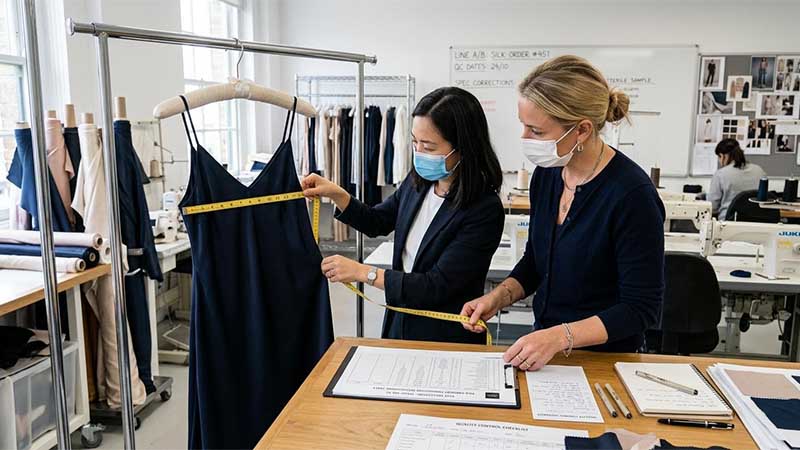
A measurement chart tells the manufacturer how the garment should fit. It should include the sample size, all points of measure, grading rules, and acceptable tolerances. This is one of the most important parts of a garment specification sheet.
For silk garments, precise fit is critical because fluid fabrics can reveal even small shape problems. You should define key measurements such as bust, waist, hip, shoulder, sleeve length, sweep, and total body length. If the style is bias cut or draped, add notes that explain how the garment should fall on the body.
A clear chart supports better quality control for silk garment manufacturing and makes it easier to compare the sample against your intended fit.
Which Construction Notes Matter Most For Silk Garments?
Construction notes tell the factory how the garment should be sewn and finished. For silk, these details should never be vague. The wrong seam type or finishing method can reduce the quality of the garment, even if the pattern is correct.
YOU should specify seam types, stitch density, hem finish, reinforcement needs, interfacing placement, and any required edge stabilization. For example, lightweight silk blouses may need French seams, while a silk scarf dress may require a narrow rolled hem. If the garment needs lining, include the lining material and how it should be attached.
Detailed sewing standards for silk garments can reduce rework, improve quality consistency, and help the manufacturer deliver a more premium result.
How Do Trims, Labels, And Packaging Affect Production?
Many brand founders focus heavily on fabric and fit, but trims and packaging also matter. Buttons, zippers, hooks, thread, care labels, woven labels, hangtags, and folding instructions should all be documented in the tech pack.
For silk garments, trims must be selected carefully. Heavy or rough components may damage delicate fabric or affect comfort. Label placement is also important because poorly placed labels can pull on the garment or create visible marks.
Packaging should be considered early as well. Silk can wrinkle, snag, or lose visual appeal if packed incorrectly. If YOU need tissue protection, folding standards, polybag instructions, or garment bags, include those details before production begins.
What Are The Most Common Tech Pack Mistakes?
One common problem is incomplete information. Missing measurements, unclear trim details, or no seam instructions can lead to avoidable sampling issues. If YOU are wondering how to reduce garment sampling errors, the first step is to improve the quality of your tech pack.
Another mistake is inconsistency. Your sketch, material list, and measurement chart must all match. If one file says silk satin and another says silk charmeuse, your manufacturer may develop the wrong sample.
A third issue is using subjective wording. Terms like “luxury finish” or “high-end quality” sound appealing, but they do not provide actionable instructions. A manufacturer needs exact specifications, not general preferences.
What Happens After YOU Send A Tech Pack To A Factory?
Once YOU send your tech pack to a factory, the manufacturer will usually review it for feasibility, costing, and sample preparation. They may ask questions, recommend technical adjustments, or suggest better construction methods based on the fabric and design.
This is why working with a clothing manufacturer that helps with tech packs can be valuable, especially if YOU are a startup brand. An experienced silk garment manufacturer can identify issues early, before they become expensive mistakes in sampling or production.
After review, the factory typically prepares a quotation, confirms materials, and begins sample development. A complete tech pack makes this process faster and more accurate.
How Can A Better Tech Pack Improve Production Results?
A stronger tech pack improves communication across every stage of apparel product development. It helps your team make faster decisions, gives the manufacturer clearer direction, and creates a measurable reference point for approvals and inspections.
For silk clothing sample development, this means fewer misunderstandings and more useful first samples. For bulk production, it supports consistency, pricing accuracy, and better quality assurance.
If YOU are building a premium brand, a better tech pack also protects your reputation. It helps ensure that the final garment reflects your original concept instead of a factory’s assumption.
Frequently Asked Questions
What Is The Difference Between A Tech Pack And A Spec Sheet?
A tech pack is the full production document for a garment. A spec sheet is usually one part of that package and focuses mainly on measurements, tolerances, and fit-related details.
Can A Manufacturer Work Without A Tech Pack?
Yes, but it is not ideal. A factory can sometimes work from samples, sketches, or basic notes, but this usually increases the risk of errors, unclear pricing, and inconsistent results.
What Should A Silk Garment Tech Pack Include?
It should include technical sketches, silk fabric details, measurement charts, trims, labels, construction notes, packaging instructions, and comments about fabric handling or finishing.
Why Is Silk Harder To Manufacture Than Some Other Fabrics?
Silk is more delicate and can be affected by fraying, slippage, sheerness, and shrinkage. It often requires more careful cutting, sewing, finishing, and packing methods than standard fabrics.
How Detailed Should My Measurement Chart Be?
It should be detailed enough for the factory to develop, check, and grade the garment without guessing. Every important point of measure should be listed with tolerances and sample size information.
What Causes Delays In Silk Clothing Sample Development?
Delays often come from incomplete tech packs, unclear fabric references, missing trim details, or design changes made after sample development has started.
How Can I Choose The Right Silk Garment Manufacturer?
Look for a manufacturer with experience in silk apparel development, strong sample-making ability, clear communication, and a willingness to review your tech pack before production begins.
Ready To Develop Silk Garments With More Confidence?
If YOU want to improve your silk apparel development process, start with a clearer and more professional tech pack. A well-structured document can help YOU get more accurate quotes, smoother sample development, and better production results from the beginning.
Contact Us today to discuss your next project with Silkua. Our team can support YOU with silk garment manufacturing, sample development, and technical review so YOU can move forward with greater confidence. Fill out our inquiry form now to get expert support and a customized quotation for your brand.
Request An Instant Quote For Your Brand!
You May Also Find These Topics Interesting

How to Source High-Quality Silk Pillowcases for Your Bedding Brand
How to Source High-Quality Sil
Silk Product Certifications and Standards: What Every Buyer Should Know
Silk Product Certifications an
Pillowcase Material Selection: The Ultimate FAQ Guide for Brand Buyers
Pillowcase Material Selection: